Understanding Crypto Watchlists
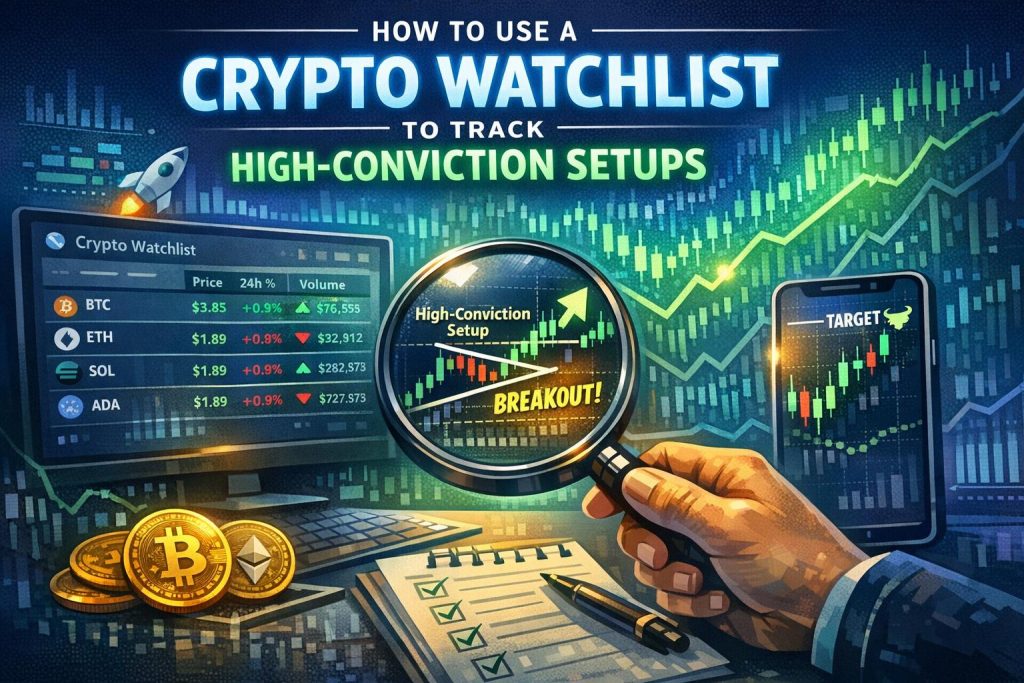
A crypto watchlist is a structured monitoring system used by traders and investors to track selected digital assets for potential opportunities. In the cryptocurrency market, where price fluctuations can occur rapidly and without warning, maintaining a focused list of assets provides clarity and organization. Instead of scanning hundreds or thousands of cryptocurrencies, traders narrow their attention to a smaller group that meets predefined criteria.
A watchlist is not merely a collection of symbols. It represents a filtered selection based on strategy, risk tolerance, technical structure, liquidity, and underlying fundamentals. By concentrating on a curated group of assets, market participants can allocate their time and analytical resources more efficiently. This structured focus supports disciplined decision-making and reduces impulsive reactions to general market noise.
Crypto watchlists serve both short-term traders and long-term investors. Day traders may use them to track volatility and intraday momentum, while swing traders focus on multi-day patterns. Long-term investors might monitor trend development, adoption metrics, and market capitalization changes. Regardless of timeframe, the watchlist remains a practical framework for structured market observation.
Key Components of a Crypto Watchlist
A well-constructed crypto watchlist includes several interconnected elements. Each component contributes to a comprehensive view of market opportunities and risks.
Asset Selection: Choosing which cryptocurrencies to monitor is the foundational step. Traders often begin with established digital assets such as Bitcoin and Ethereum due to their liquidity and influence over broader market trends. These large-cap assets frequently set directional tone for altcoins. In addition to major cryptocurrencies, a watchlist may include mid-cap or emerging projects with clear catalysts, expanding ecosystems, or favorable technical structures. Limiting the number of tracked assets helps prevent information overload and maintains analytical depth.
Selection criteria vary depending on strategy. Some traders prioritize high liquidity and tight spreads to minimize slippage. Others seek volatility for short-term momentum trades. Long-term investors may evaluate development activity, tokenomics, governance models, and adoption metrics. Regardless of approach, disciplined asset selection ensures that each listing has a defined reason for inclusion.
Price Alerts: Price alert systems are an essential operational element. Modern trading platforms allow users to set notifications at predetermined price levels. These alerts act as triggers, informing traders when support or resistance zones are approached, when breakouts occur, or when price deviates significantly from recent averages.
Alerts reduce the need for constant screen monitoring while preserving responsiveness. For example, a trader anticipating a breakout above resistance can configure an alert slightly above that level. Similarly, alerts near invalidation points allow rapid reaction to limit potential losses. Over time, traders refine alert placement to align with their preferred entry and exit strategy.
News and Announcements: Cryptocurrency markets respond quickly to regulatory developments, technological upgrades, security incidents, and partnership announcements. A watchlist should incorporate a system for tracking relevant news for each asset. Hard forks, protocol updates, token burns, governance proposals, and regulatory classifications can influence valuation.
Monitoring project-specific announcements as well as broader macroeconomic developments provides context. For instance, changes in interest rates, institutional investment trends, or regulatory frameworks may impact overall market liquidity. Integrating fundamental awareness into a watchlist reduces the likelihood of technical analysis being undermined by external events.
Technical Indicators: Many traders complement price monitoring with technical indicators. Moving averages help identify overall trend direction. The Relative Strength Index (RSI) assists in evaluating overbought or oversold conditions. Bollinger Bands offer insight into volatility expansion or contraction. Volume metrics confirm the strength of price movements.
Indicators should be applied systematically rather than randomly. Consistency in timeframe selection and parameter settings ensures that signals remain comparable over time. Although no indicator is predictive in isolation, combining them with clear structural analysis enhances decision clarity.
Building and Maintaining a Crypto Watchlist
Constructing a watchlist requires deliberate preparation rather than spontaneous selection. The process typically begins with defining the overall trading framework. Time horizon, preferred volatility level, and capital allocation structure influence which assets qualify.
Identify High-Conviction Cryptocurrencies: High-conviction assets demonstrate characteristics that align closely with a trader’s methodology. These may include strong market structure, favorable risk-to-reward potential, consistent liquidity, or solid development activity. Conviction does not imply certainty; it indicates that multiple analytical factors converge to support monitoring the asset closely.
Fundamental research can strengthen conviction. Evaluating whitepapers, development roadmaps, ecosystem partnerships, token distribution models, and governance mechanisms provides context beyond price fluctuations. Metrics such as total value locked (TVL), active wallet addresses, transaction volume, and developer commit activity can indicate network traction and sustainability.
Utilize Crypto Platforms and Tools: Watchlist functionality is typically integrated into charting and market tracking platforms. These tools enable users to reorder assets, categorize them by sector, and attach annotations to charts. On platforms such as TradingView and CoinMarketCap, traders can combine live price tracking with technical analysis overlays. Alerts, comparative charts, and performance dashboards streamline workflow and centralize information.
Effective use of these platforms reduces fragmentation. Instead of switching between multiple applications for charts, news, and pricing data, a consolidated environment increases analytical efficiency. Over time, traders may develop templates that standardize chart layouts and indicator configurations across all watchlist assets.
Regularly Update Your Watchlist: Cryptocurrency markets evolve rapidly. Projects may lose momentum due to reduced development activity, declining liquidity, or adverse regulatory outcomes. Conversely, emerging assets may exhibit growing adoption or technical strength. Periodically reviewing watchlist composition prevents stagnation.
Maintenance involves removing underperforming or illiquid assets and adding those that meet revised criteria. Some traders conduct weekly audits, evaluating relative strength rankings and market structure. Others adjust their list based on sector rotation, such as shifts between decentralized finance, layer-two solutions, artificial intelligence tokens, or gaming ecosystems. Continuous refinement keeps the watchlist relevant and aligned with strategy.
Analyzing High-Conviction Setups
The primary purpose of a crypto watchlist is to identify actionable opportunities. High-conviction setups arise when multiple analytical factors align. Rather than relying on a single signal, traders seek confluence between price structure, volume dynamics, momentum indicators, and broader market conditions.
Chart Patterns: Classical chart formations often provide structured entry and exit frameworks. A head and shoulders pattern may indicate potential trend reversal after extended upward movement. Double tops and double bottoms highlight repeated rejection or accumulation at specific price levels. Triangles and flags typically represent consolidation phases preceding expansion. Recognizing these shapes across consistent timeframes supports scenario planning.
It is important to confirm patterns with volume and overall market alignment. A breakout from a consolidation range accompanied by elevated trading volume generally reflects broader market participation. Conversely, low-volume breakouts may lack follow-through. Structured pattern analysis contributes to disciplined timing rather than impulsive execution.
Volume Analysis: Volume represents participation intensity. When price rises on increasing volume, the movement may reflect genuine demand. Declining volume during upward movement may indicate weakening momentum. Observing divergence between price and volume can reveal potential reversals.
For example, if price continues to form higher highs while volume declines steadily, the rally may be losing strength. Similarly, accumulation phases often feature gradual price stabilization accompanied by incremental volume growth. Integrating volume metrics into watchlist analysis refines entry timing and improves evaluation of trend sustainability.
Market Sentiment: Sentiment reflects collective positioning and expectations. In cryptocurrency markets, sentiment often shifts rapidly based on macroeconomic changes, regulatory commentary, or technological breakthroughs. Monitoring social media trends, derivatives funding rates, open interest data, and news coverage helps contextualize price movement.
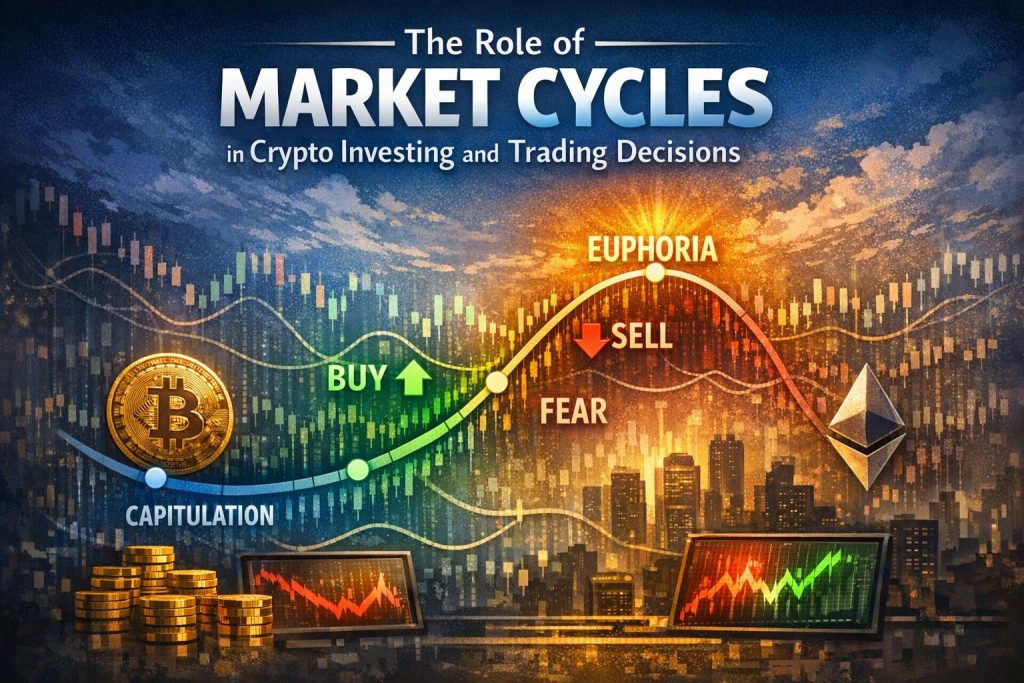
Excessively optimistic sentiment can precede corrective phases, while extreme pessimism may accompany accumulation zones. Sentiment analysis should complement rather than override technical and fundamental evaluation. Within a watchlist framework, traders may tag assets experiencing sentiment extremes for closer observation.
Combining chart structure, volume confirmation, and sentiment context creates layered analysis. A high-conviction setup often emerges when a bullish technical breakout occurs in conjunction with strengthening volume and improving sentiment indicators. This alignment does not eliminate uncertainty but narrows scenario probabilities.
Risk Management
Effective watchlist management extends beyond identifying opportunities. Risk management defines how capital is deployed and protected. Without predefined parameters, even well-analyzed trades can produce inconsistent outcomes.
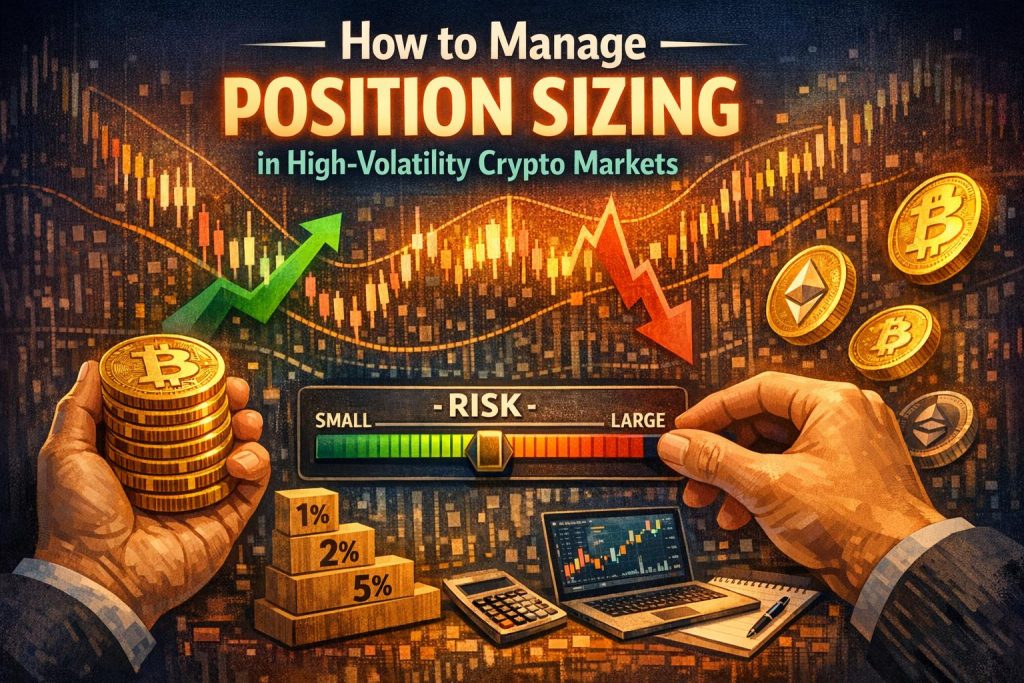
Position sizing forms the foundation of risk control. Allocating a fixed percentage of capital per trade ensures that individual losses remain manageable. Traders commonly calculate position size based on the distance between entry point and stop-loss level. This approach standardizes exposure regardless of asset volatility.
Stop-loss placement is another essential practice. Stops are typically positioned at price levels that invalidate the trade thesis. For example, if a breakout above resistance triggers entry, a stop may be set below the previous consolidation range. This logical placement reduces emotional interference and enforces discipline.
Take-profit levels, whether fixed or dynamically adjusted, help secure gains. Some traders scale out of positions as price approaches predefined resistance zones. Others trail stops behind moving averages to capture extended trends. Documenting each decision within a trading journal enhances accountability and supports performance evaluation over time.
Diversification within a watchlist also plays a role in risk control. Concentrating capital exclusively in highly correlated assets may amplify exposure to sector-wide volatility. Monitoring correlation metrics between Bitcoin and altcoins, or among tokens within the same sector, informs allocation adjustments.
Strategic Organization of Watchlists
As trading experience develops, many market participants move beyond a single generic watchlist. Instead, they organize assets into segmented categories. For instance, one list may contain large-cap core holdings, another may track emerging small-cap tokens, and a separate list may focus on short-term technical breakouts. Structured segmentation improves efficiency by clarifying purpose.
Sector-specific watchlists also provide insight into relative performance trends. Observing simultaneous strength across multiple layer-one blockchains, for example, may indicate sector rotation. Conversely, weakness across decentralized finance tokens might signal declining liquidity within that niche. Structured grouping enables top-down analysis before individual asset selection.
Performance tracking can be incorporated directly into the watchlist environment. Recording percentage changes over various time horizons—daily, weekly, monthly—offers comparative insight. Assets consistently outperforming broader market benchmarks may warrant deeper analysis for sustained momentum.
Long-Term Versus Short-Term Watchlists
The design of a watchlist should reflect the intended timeframe. A short-term trading watchlist often emphasizes liquidity, volatility, and technical structure. Indicators are set to shorter intervals, and alerts are tighter to capture rapid movements. Entries and exits may occur within hours or days.
In contrast, a long-term investment watchlist prioritizes network fundamentals, ecosystem expansion, governance stability, and macro alignment. Technical analysis may focus on weekly or monthly charts rather than intraday fluctuations. Price alerts are typically broader, reflecting larger structural shifts rather than minor oscillations.
Separating these approaches prevents analytical conflict. Attempting to apply short-term indicators to long-term holdings may create unnecessary adjustments, while ignoring structural fundamentals in short-term trades may increase exposure to unexpected events. A clearly defined watchlist for each objective enhances clarity.
Continuous Improvement and Review
A crypto watchlist is not static. Market structure evolves as institutional participation increases, regulatory frameworks mature, and technological innovation accelerates. Periodic performance review ensures that the watchlist remains an effective decision-making tool.
Review may involve assessing whether monitored assets produced actionable opportunities, whether alerts were appropriately placed, and whether analysis techniques remain relevant. Traders may backtest historical setups to refine criteria. Adjustments based on empirical observation strengthen long-term consistency.
Maintaining documentation of trade rationale, execution quality, and outcome metrics supports objective evaluation. Over time, patterns emerge regarding which asset types and setup conditions align best with individual strengths. Incorporating these insights into watchlist construction promotes gradual improvement.
In practice, a crypto watchlist represents disciplined observation rather than constant action. Its value lies in structured preparation. By focusing attention on selected assets, integrating technical and fundamental awareness, and applying systematic risk control, traders and investors position themselves to respond methodically to market developments. Continuous refinement of this framework enhances efficiency and supports consistent participation in the evolving cryptocurrency landscape.