How to Use Blockchain Explorers for Crypto Due Diligence

Understanding Blockchain Explorers

Blockchain explorers are fundamental tools within the cryptocurrency ecosystem, enabling users to view, search, and verify data recorded on a blockchain. A blockchain itself is a distributed ledger that stores information in blocks linked together chronologically and secured through cryptographic principles. While this ledger is publicly accessible on most major networks, the raw data is not easily readable without a specialized interface. A blockchain explorer functions as that interface, translating complex blockchain data into an understandable and searchable format.

In practical terms, a blockchain explorer operates similarly to a search engine. Instead of indexing websites, it indexes blockchain data such as blocks, transactions, wallet addresses, fees, timestamps, and network statistics. By entering specific identifiers, such as a transaction hash or wallet address, users can retrieve comprehensive information about activity on the network. This transparency is a defining feature of many blockchain systems and supports accountability, auditability, and independent verification.

Blockchain explorers are available for most public blockchains, including Bitcoin, Ethereum, and many other digital asset networks. Each explorer is tailored to the protocol it supports, reflecting differences in consensus mechanisms, transaction structures, and smart contract capabilities. Despite these differences, the core purpose remains consistent: to provide structured visibility into blockchain data.

The Purpose of Blockchain Explorers

Blockchain explorers perform several essential functions, particularly in the context of due diligence, auditing, compliance, and operational verification. Their primary value lies in providing open access to transaction records and network activity, allowing any interested party to independently confirm information without relying on centralized intermediaries.

Transparency is one of the central characteristics of public blockchains. Every confirmed transaction becomes part of a permanent and immutable record. Blockchain explorers make this record accessible and interpretable. This capability is especially relevant for investors, analysts, compliance professionals, and developers who need to verify the authenticity of transactions or evaluate the behavior of specific addresses.

Another core purpose of blockchain explorers is to facilitate trust minimization. Because users can independently verify transactions, they do not need to rely solely on statements from exchanges, counterparties, or service providers. This reduces counterparty risk and enhances confidence in system integrity. For institutions and individuals conducting due diligence, the ability to trace asset flows and confirm balances is an important component of operational risk assessment.

Blockchain explorers also provide insight into network health. Many explorers display aggregate statistics such as block height, hash rate, validator activity, mempool size, and average fees. These metrics help users evaluate the performance and stability of a blockchain network. Investors may use such data to understand congestion levels, transaction costs, and confirmation times when assessing the practicality of using a particular blockchain.

Tracking Transactions

One of the most common uses of a blockchain explorer is transaction tracking. Every transaction submitted to a blockchain network is assigned a unique identifier known as a transaction hash, or transaction ID. By entering this identifier into the search field of an explorer, users can retrieve detailed information regarding the transaction’s status.

The transaction page typically includes the sender and recipient addresses, the amount transferred, the transaction fee paid, the time of broadcast, the block number in which it was included, and the number of confirmations received. Confirmations represent the number of blocks added to the chain after the block containing the transaction. In many networks, a higher number of confirmations increases the level of security and reduces the likelihood of transaction reversal.

Transaction tracking is particularly important for users transferring funds between exchanges, wallets, or counterparties. Rather than relying solely on platform notifications, the user can independently confirm whether the transaction has been broadcast to the network, included in a block, and sufficiently confirmed. This is especially relevant during periods of network congestion when transaction processing times may vary.

In professional contexts, transaction tracking may support audit procedures. For example, an organization conducting an internal financial review can confirm that digital asset transfers occurred at specific times and in specified amounts. Since blockchain records are immutable once finalized, explorers provide a reliable reference point for transaction verification.

Examining Wallet Balances

Another significant function of blockchain explorers is the ability to examine wallet balances and transaction histories associated with specific addresses. By entering a public wallet address, users can view its current balance, total received and sent amounts, and its complete history of transactions.

This feature supports several forms of due diligence. Investors evaluating a decentralized project may review treasury addresses to assess asset allocation and movement patterns. Similarly, individuals dealing with counterparties can verify that an address holds sufficient funds before proceeding with a transaction.

It is important to note that blockchain explorers display information tied to public addresses rather than personal identities. Unless an address is publicly associated with a known entity, the identity of the owner remains pseudonymous. Nevertheless, transaction patterns, clustering techniques, and public disclosures can provide contextual clues in some cases.

Wallet examination also aids in compliance and risk management. Organizations subject to anti-money laundering obligations may analyze transaction histories to identify unusual patterns or interactions with flagged addresses. While blockchain explorers themselves may not provide advanced analytics, they serve as the foundational tool for accessing primary ledger data.

For everyday users, checking a wallet balance via an explorer can serve as a secondary validation mechanism. If a wallet interface is inaccessible or malfunctioning, the blockchain explorer can confirm whether funds remain associated with the address on the blockchain. Because the blockchain serves as the ultimate record of ownership, explorers provide direct access to that authoritative source.

Steps to Use Blockchain Explorers for Due Diligence

Using a blockchain explorer effectively requires an understanding of both the network in question and the specific objectives of the inquiry. Due diligence may involve confirming transaction validity, analyzing wallet behavior, evaluating token contract legitimacy, or reviewing historical network activity. While the technical details vary by blockchain, the general process follows a structured approach.

Accessing a Blockchain Explorer

The first step is selecting an explorer that supports the relevant blockchain. Each network typically has one or more widely used explorers developed by independent teams or ecosystem organizations. It is advisable to select platforms that are established, regularly maintained, and widely recognized within the community.

Compatibility is essential. For example, a Bitcoin transaction cannot be searched on an Ethereum explorer, as each network maintains distinct ledgers and data structures. Users should confirm that the explorer matches the asset or token under review.

Once the appropriate explorer is identified, users can access its search interface through a standard web browser. No special credentials are typically required to view public blockchain data. However, some explorers may offer additional features to registered users, such as address tagging, portfolio tracking, or advanced data visualization.

Searching for a Transaction or Wallet

After accessing the explorer, users can enter a transaction hash, wallet address, or block number into the search field. Each type of query serves a different purpose.

Entering a transaction hash retrieves detailed information about a specific transfer of digital assets. This is particularly useful when verifying payment status. If a transaction is pending, the explorer may indicate that it resides in the mempool, awaiting confirmation. If confirmed, the explorer will show the block number and confirmation count.

Entering a wallet address retrieves a chronological history of transactions associated with that address. This allows users to examine patterns such as frequency of activity, average transaction size, and interaction with other addresses. When conducting due diligence, it may be helpful to review a longer time horizon to identify consistent behavioral patterns rather than focusing solely on recent activity.

Block searches provide information about the blockchain’s structure, including the list of transactions included in a specific block. This feature can be useful for technical analysis of network throughput or validation of timestamp accuracy.

Analyzing the Data

Once relevant information is retrieved, analysis becomes the central task. For transaction verification, the key variables often include confirmation count, fee level, and recipient address. If the recipient address matches the intended destination and the transaction has sufficient confirmations, it is generally considered finalized under normal network conditions.

For wallet analysis, reviewing transaction flows over time can help identify operational characteristics. For example, exchange wallets may show high transaction volumes with numerous counterparties, while personal wallets may exhibit less frequent activity. Treasury addresses for decentralized projects may display periodic allocations to development teams or liquidity pools.

In more advanced cases, due diligence may involve verifying smart contract addresses on programmable blockchains. Explorers for such networks often provide access to contract code, token supply details, and event logs. Reviewing whether a token contract is verified and matches its documented specifications can reduce the risk of interacting with counterfeit or malicious tokens.

Effective analysis requires contextual understanding. A single transaction or balance snapshot may not provide sufficient information to form conclusions. Instead, users should interpret blockchain data in conjunction with external documentation, project disclosures, and relevant regulatory frameworks.

Tips for Effective Use of Blockchain Explorers

Effective use of blockchain explorers involves both technical awareness and procedural discipline. While the data is publicly accessible, accurate interpretation requires attention to detail and verification practices.

Cross-Check Information: When conducting important reviews, verify findings across multiple explorers if possible. Although explorers draw from the same blockchain data, differences in interface design or indexing speed may result in temporary discrepancies. Cross-verification helps ensure reliability, particularly during periods of high network activity.

Stay Informed on Updates: Blockchain networks periodically implement protocol upgrades that may affect transaction formatting, fee mechanisms, or confirmation logic. Explorers also update their platforms to support new features such as token standards or layer-two integrations. Staying informed helps users interpret data accurately and avoid outdated assumptions.

Be Mindful of Security: While viewing blockchain data does not require sharing private keys, users should exercise caution when interacting with explorer features. Private keys should never be entered into an explorer. Additionally, posting wallet addresses publicly may reduce privacy, as transaction histories are permanently visible. Understanding the distinction between public and private information is essential for maintaining operational security.

Users should also be aware of phishing risks. Malicious websites may imitate legitimate explorers to capture sensitive information. Confirming the authenticity of the platform before conducting searches is an important precaution.

Another practical consideration is understanding network differences. Some blockchains use account-based models, while others use unspent transaction output models. These structural differences influence how balances and transactions appear within explorers. A working knowledge of these models supports more accurate interpretation.

Broader Implications for Transparency and Compliance

Beyond individual transaction verification, blockchain explorers contribute to broader transparency in the digital asset sector. Regulators, auditors, researchers, and financial institutions frequently rely on explorer data to monitor ecosystem activity. The open availability of transaction histories enables independent analysis without requiring privileged access.

For compliance purposes, blockchain explorers serve as an entry point to transaction tracing. While sophisticated analytics platforms may provide enhanced capabilities, the foundational data originates from public blockchain records accessible through explorers. This supports investigative processes related to fraud detection, sanction screening, and asset recovery.

In institutional contexts, documented use of blockchain explorers can form part of internal control frameworks. For example, treasury departments managing digital assets may implement procedures requiring independent verification of large transfers via an external explorer before accounting entries are finalized. Such practices align blockchain operations with established financial governance standards.

Researchers also benefit from explorer data when analyzing network decentralization, transaction fee markets, and adoption trends. Because historical records are preserved indefinitely, longitudinal studies of blockchain activity are possible without relying on centralized reporting entities.

Conclusion

Blockchain explorers function as essential interfaces between users and decentralized ledger networks. By providing searchable access to transaction records, wallet balances, and block data, they enable independent verification and informed decision-making. Their role extends beyond convenience, supporting transparency, due diligence, compliance, auditing, and research.

Effective use of a blockchain explorer involves selecting an appropriate platform, accurately searching for relevant identifiers, and carefully analyzing retrieved data within its broader context. Attention to confirmation counts, address matching, transaction patterns, and network conditions enhances reliability in both personal and professional applications.

As blockchain adoption continues across financial and technological sectors, the ability to interpret on-chain data becomes increasingly valuable. Blockchain explorers remain foundational tools in this process, offering direct visibility into the operational mechanics of decentralized systems and supporting disciplined engagement with digital assets.

How to Evaluate Crypto Project Treasury Activity and Runway

Understanding Treasury Activity in Crypto Projects

Evaluating the treasury activity of a crypto project is vital to assessing the project’s financial health, operational discipline, and long-term viability. In blockchain-based organizations, the treasury often consists of a combination of native tokens, stablecoins, major cryptocurrencies such as Bitcoin or Ether, and occasionally fiat reserves or tokenized real-world assets. Unlike traditional corporations that rely on centralized bank accounts and audited financial statements, many crypto projects manage treasuries directly on-chain, making their financial behavior observable but not always straightforward to interpret.

The treasury functions as the financial backbone of a project. It supports protocol development, ecosystem incentives, security audits, marketing campaigns, partnerships, infrastructure maintenance, and contributor compensation. In decentralized autonomous organizations (DAOs), treasury decisions may be governed collectively by token holders. In more centralized structures, a foundation or core team may control allocations. In both cases, examining treasury activity offers insight into financial planning, governance standards, and sustainability.

Understanding treasury activity requires more than viewing token balances. It involves analyzing inflows and outflows, the structure of reserves, exposure to volatility, commitments to long-term incentives, and operational expenditures. A project with significant funds but weak treasury management may still face liquidity constraints or funding shortages under adverse market conditions. Conversely, a moderately funded project with disciplined allocation and diverse revenue streams may demonstrate financial resilience over time.

Importance of Treasury Activity Analysis

The treasury exists to serve strategic objectives. Funds may be allocated to research and development, grants for ecosystem builders, liquidity provisioning on exchanges or decentralized markets, community rewards, security enhancements, and legal compliance. Each allocation reflects priorities and risk tolerance.

Analyzing treasury management allows stakeholders to determine whether a project’s financial practices align with its publicly stated roadmap. If a protocol emphasizes long-term infrastructure but allocates a large proportion of funds to short-term promotional incentives, this may signal a divergence between communication and practice. Similarly, a project that invests heavily in research, security, and protocol upgrades may indicate a focus on sustainable growth.

Investors and community members also use treasury data to evaluate risk exposure. Projects that hold a large share of their reserves in their own native token may be vulnerable to price declines. If the token’s value falls substantially, the treasury’s purchasing power may decrease, reducing the ability to fund operations. By contrast, projects that hold stablecoins or diversified crypto assets may mitigate certain volatility risks, though they remain exposed to broader market movements.

Treasury activity additionally reflects governance maturity. In well-structured projects, budget proposals undergo review processes, and approved expenditures are traceable on-chain. In less organized systems, treasury transfers may appear irregular or insufficiently documented. Monitoring these patterns can help assess whether internal controls and oversight mechanisms are functioning properly.

From a regulatory perspective, treasury transparency may become increasingly relevant. As jurisdictions implement digital asset reporting standards, projects that maintain clear financial records and publish expenditure reports may be better positioned to adapt. Treasury visibility can therefore influence not only investor confidence but also compliance readiness.

Key Indicators of Treasury Activity

Total Treasury Value: The overall value of assets held by a project provides a baseline measure of financial capacity. This figure is typically calculated by aggregating the current market value of on-chain holdings and any disclosed off-chain reserves. While the total value offers a high-level snapshot, it should be interpreted carefully. Rapid increases in value may stem from token price appreciation rather than disciplined savings, whereas declines may reflect market cycles rather than excessive spending. Analysts often evaluate total value alongside historical trends to identify patterns of accumulation, drawdowns, or restructuring.

Asset Allocation: The distribution of treasury reserves across different asset classes reveals risk management strategies. Holdings may include stablecoins to preserve nominal value, large-cap cryptocurrencies for moderate growth exposure, native tokens for governance alignment, and yield-generating positions in decentralized finance protocols. Concentration risk becomes relevant when a large percentage of reserves are tied to a single volatile asset. Diversification can reduce exposure to price shocks but may introduce other risks, such as smart contract vulnerabilities or counterparty exposure. Careful review of allocation patterns helps determine whether risk levels align with operational needs.

Liquidity Management: Liquidity refers to how readily assets can be converted into usable funds without significant price impact. Projects need accessible liquidity for day-to-day expenses, including payroll, infrastructure costs, and vendor payments. Locking a large share of funds in long-term staking arrangements or illiquid token positions may generate yield but constrain operational flexibility. Effective treasury management balances the desire for returns with the necessity of immediate access to funds. Evaluating liquidity often involves examining staking commitments, vesting schedules, and token lockups.

Beyond these primary indicators, additional factors contribute to a comprehensive understanding. Treasury inflow sources, such as token sales, protocol fees, grants, or venture investment, shape sustainability. Projects funded solely by initial token sales may face depletion risks if ongoing revenue is limited. In contrast, protocols with consistent fee generation may replenish their treasuries organically.

Outflow patterns also require examination. Regular, predictable expenditures suggest controlled budgeting, while large, sporadic transfers to unidentified wallets may raise questions about internal oversight. Observers frequently analyze multi-signature wallet activity, governance-approved transactions, and grant disbursements to verify consistency with published budgets.

Assessing the Runway of Crypto Projects

The runway represents the estimated period during which a project can sustain operations at current expenditure levels without securing additional funding. It is a critical metric for evaluating financial endurance. In volatile markets, runway duration may change rapidly, particularly when reserves are heavily exposed to price fluctuations.

Runway analysis integrates treasury value and operational expenses. While the concept resembles that used in traditional startups, crypto projects face distinctive variables. Token price volatility, fluctuating transaction fees, variable contributor compensation structures, and dynamic governance decisions can rapidly alter cost structures. As a result, runway should be regarded as an estimate rather than a fixed measure.

A short runway does not necessarily imply instability if a project has reliable revenue streams or active fundraising plans. However, it may indicate sensitivity to market downturns. A longer runway provides greater flexibility to continue development during bearish periods, pursue strategic investments, or withstand unforeseen disruptions.

Calculating Runway

To calculate runway, analysts divide total liquid treasury reserves by the monthly burn rate, defined as the net outflow required to sustain operations. This includes salaries, contractor payments, infrastructure expenses, legal costs, security audits, marketing initiatives, and ecosystem grants.

Accurate calculation requires distinguishing between unrealized token holdings and readily convertible assets. A treasury composed primarily of illiquid tokens may overstate functional runway. Therefore, some analysts apply discount rates to volatile assets or consider conservative price assumptions. Others compute multiple runway scenarios based on different market conditions.

Burn rate estimation is equally important. Monthly expenditures can vary based on hiring cycles, event campaigns, product releases, or governance-approved grants. Projects often publish quarterly or annual financial summaries, from which average burn rates may be derived. In decentralized systems, grant programs may introduce irregular cost spikes that complicate forecasting. Therefore, assessing runway involves reviewing both historical spending trends and projected commitments.

Factors Affecting Runway

Burn Rate: A high burn rate reduces the number of months a project can operate without new funding. Expansion phases, aggressive marketing, or extensive grant programs may increase spending. While elevated expenditure can accelerate growth, it also shortens financial endurance. Monitoring how rapidly reserves decline provides early signals of potential funding pressures.

Revenue Streams: Projects with recurring income may offset operational costs and extend runway. Revenue can originate from protocol usage fees, staking commissions, subscription models, validator rewards, or enterprise partnerships. Even modest but consistent inflows can significantly alter sustainability calculations. Net runway assessments often incorporate revenue by subtracting it from gross monthly expenses to derive a net burn rate.

Market Conditions: Cryptocurrency markets are characterized by significant volatility. A sudden decline in token prices can reduce treasury valuation and shorten runway without any change in spending behavior. Conversely, bull market conditions may expand runway through asset appreciation. Prudent projects sometimes hedge against market volatility by converting portions of treasury holdings into stable assets during periods of high valuation.

Additional influences may include token unlock schedules, vesting obligations, and debt commitments. Projects that distribute tokens to contributors under vesting agreements must anticipate liquidity impacts upon cliff expirations. Similarly, obligations arising from liquidity incentives or community reward programs may create long-term financial commitments that influence effective runway.

Governance structure can also affect runway dynamics. In DAOs where spending proposals require voting, operational decisions may be delayed, influencing how funds are deployed. Coordinated governance processes may enhance accountability but slow adaptability. Evaluating runway therefore benefits from understanding both financial metrics and organizational structure.

Monitoring and Reporting Treasury Activity

Continuous monitoring of treasury activity improves transparency and reduces information asymmetry between project leadership and stakeholders. Blockchain technology provides the technical capacity for real-time treasury visibility, as wallet balances and transactions are publicly verifiable. However, interpretation requires contextual information from the project regarding the purpose of each transfer.

Regular financial reporting contributes to informed decision-making. Reports may include balance summaries, expenditure breakdowns, grant allocations, revenue statistics, runway estimates, and strategic financial priorities. Some projects publish dashboards or periodic community updates detailing treasury movements and liquidity positions.

Monitoring extends beyond static balances. Observers examine whether spending aligns with governance decisions, whether transfers occur between known multi-signature wallets, and whether security measures such as hardware custody or distributed key management are in place. Treasury analytics platforms can aggregate wallet data to present structured overviews of inflows, outflows, and asset composition.

Projects may also establish internal risk policies that define acceptable exposure levels, rebalancing procedures, and liquidity thresholds. Public disclosure of such policies can clarify how financial decisions are made. While disclosure practices vary widely, consistent communication enhances accountability.

Benefits of Transparency

Transparency enhances credibility within the community and among external observers. When treasury movements match disclosed strategies, stakeholders gain confidence in leadership discipline. Transparent reporting can also reduce speculation regarding fund usage, particularly during periods of market stress.

Clear reporting structures help contributors understand budgeting priorities. Developers, grant applicants, and ecosystem partners may rely on treasury health to assess collaboration opportunities. Visibility into runway and reserves can influence strategic partnerships and integration decisions.

Transparency also supports governance participation. In token-governed systems, voters require accurate financial information to evaluate funding proposals. Without reliable data, governance may become reactive or misinformed. Formal budgeting processes, combined with published financial summaries, strengthen institutional development within decentralized environments.

From a risk management standpoint, openness may deter misuse of funds. The knowledge that transfers are publicly observable can encourage adherence to established financial controls. Additionally, transparent reporting may facilitate external audits and regulatory engagement if required.

Encouraging Best Practices

To strengthen treasury management, projects may rely on third-party audits, accounting advisors, or specialized transparency platforms. Independent audits evaluate wallet controls, transaction authorization processes, and compliance with internal policies. Although audits cannot eliminate all risks, they provide structured review and documentation of financial procedures.

Multi-signature wallet configurations are commonly used to reduce single-point control over large balances. By requiring multiple approvals for transactions, projects can distribute responsibility among trusted parties. Hardware security modules and cold storage arrangements further protect reserves from unauthorized access.

Formal treasury committees or financial working groups may oversee budgeting and strategic allocation decisions. In DAOs, committees can prepare proposals and present detailed financial analyses before governance votes. Structured oversight fosters consistency and accountability.

Scenario planning also constitutes a valuable practice. Projects may model treasury outcomes under various market conditions, evaluating worst-case and moderate-case assumptions. This approach supports proactive rebalancing or cost adjustments when necessary.

Educational outreach within the community improves comprehension of treasury reports. Publishing explanatory materials that describe accounting frameworks, valuation methods, and budgeting principles enables stakeholders to interpret data effectively.

For additional resources on evaluating crypto project treasury activity and runway, visit this insightful article.

The Importance of Vesting Schedules in Crypto Investment Research

The Role of Vesting Schedules in Crypto Investment

In the realm of cryptocurrency investments, understanding vesting schedules is crucial for both new and experienced investors. Vesting schedules outline the timeline and conditions under which crypto assets are allocated to stakeholders, such as founders, development teams, advisors, and early investors. This mechanism plays a central role in shaping token supply dynamics, influencing governance power, and affecting price behavior over time. For participants in token markets, analyzing vesting terms is an essential component of due diligence.

In traditional finance, vesting structures are commonly used in equity compensation plans to ensure that executives and employees remain committed to a company’s long-term growth. Cryptocurrency projects have adopted similar mechanisms, though often with greater complexity due to token liquidity, decentralized governance models, and the global nature of blockchain markets. Because many tokens become tradable shortly after launch, without vesting safeguards insiders could exit positions rapidly, potentially destabilizing the project’s market value and undermining investor confidence.

What Is a Vesting Schedule?

A vesting schedule is a predefined timetable that specifies when and how allocated tokens become accessible to designated stakeholders. Rather than granting immediate control over the entire token allocation, projects release tokens gradually over a set period. The aim is to align incentives among contributors and investors while moderating sudden increases in circulating supply.

In crypto projects, a vesting schedule is typically embedded into the tokenomics model and described in documentation such as whitepapers or token allocation reports. Smart contracts often automate the distribution process, ensuring that tokens unlock according to predetermined rules without requiring manual intervention. This automation enhances transparency and reduces counterparty risk, provided that the smart contract code is secure and immutable.

Vesting schedules frequently apply to founders, core developers, advisors, private sale participants, and ecosystem funds. Public sale participants may or may not face vesting restrictions, depending on the project’s design. The distribution framework determines how tokens transition from a theoretical maximum supply to circulating supply available on exchanges.

Core Elements of Vesting Arrangements

Several structural elements define a vesting arrangement. The vesting period refers to the total time during which tokens are gradually unlocked. The cliff period defines an initial phase in which no tokens are released. The release frequency describes how often tokens become available once vesting begins, such as monthly, quarterly, or annually. The allocation percentage indicates what share of total supply is subject to vesting.

These variables interact to shape supply inflation and liquidity patterns. For example, a project that allocates a significant percentage of tokens to insiders with a short vesting period may face concentrated selling pressure once tokens unlock. Conversely, a longer and more gradual vesting design can smooth supply expansion and mitigate shocks.

Common Vesting Structures

Among the various models used in practice, cliff vesting and linear vesting are the most prevalent.

With cliff vesting, no tokens are released until a specified initial milestone or time threshold is reached. For example, a one-year cliff means recipients receive no tokens during the first year. After the cliff expires, a portion—sometimes a substantial amount—becomes available, followed by additional gradual releases. Cliffs are particularly common for founding teams, as they reinforce retention during the project’s formative stages.

Under linear vesting, tokens are distributed in equal increments over the vesting period. If a stakeholder is allocated 1 million tokens over four years with monthly linear vesting, approximately 1/48 of the allocation is released each month. This structure provides predictability in token issuance and can help market participants anticipate supply changes.

Other variations include graded vesting, milestone-based vesting, and hybrid structures. In milestone-based models, token release is linked to predefined objectives such as product launches, protocol upgrades, or user growth metrics. While less common, this approach directly ties rewards to measurable performance indicators.

Strategic Rationale Behind Vesting

Vesting serves multiple strategic objectives within cryptocurrency ecosystems. At a fundamental level, it encourages long-term participation by reducing the incentive for immediate profit-taking. Founders and early investors who cannot immediately liquidate holdings are more likely to focus on network development, governance improvements, and sustained adoption.

It also functions as a signaling mechanism. Projects that implement multi-year vesting periods for core contributors may signal confidence in their roadmap and commitment to gradual growth. In contrast, minimal vesting requirements may raise questions about alignment of interests.

Moreover, vesting structures support supply management. Since token value is influenced by circulating supply, predictable unlock patterns allow the market to absorb new tokens more efficiently. Unexpected or poorly communicated unlock events can produce volatility, particularly in projects with relatively low trading liquidity.

Impact on Market Dynamics

The relationship between vesting schedules and market behavior is significant. When substantial token quantities unlock, market participants often anticipate selling pressure. This anticipation can influence price movements even before the unlock event occurs. Traders may monitor token unlock calendars to adjust positions accordingly.

Sudden increases in circulating supply can create short-term imbalances between supply and demand. If demand does not grow proportionally with new token issuance, price declines may follow. Conversely, if unlocked tokens are retained rather than sold, or if the project demonstrates strong growth during the vesting period, negative price effects may be limited.

Vesting also affects liquidity depth. Tokens that are locked cannot be traded, staked, or used as collateral. As more tokens enter circulation, liquidity improves, which can reduce volatility over the long term. Therefore, vesting design must balance immediate stability with future ecosystem flexibility.

Vesting and Investor Confidence

For external investors, transparency regarding token release schedules is essential. When vesting details are clearly disclosed and verifiable through blockchain explorers or audited smart contracts, investor confidence tends to increase. The ability to model future supply changes contributes to informed valuation analysis.

Projects that lack clarity regarding token allocation or that modify vesting conditions without adequate disclosure may face reputational challenges. Changes in vesting schedules, such as accelerating token unlocks, can be perceived as weakening alignment between insiders and public investors.

Clear communication plays a critical role in managing expectations around unlock events. Mature projects often publish periodic reports detailing token distribution, remaining locked allocations, and upcoming releases.

Evaluating Vesting Schedules as an Investor

Assessing a project’s vesting schedule requires examination of several interrelated factors. The duration of the vesting period is a starting point. Multi-year structures often suggest that core contributors are incentivized to focus on long-term outcomes. Short-term vesting may provide earlier liquidity but can increase turnover risk among team members.

The proportion of total supply allocated to insiders is equally important. Even with a long vesting period, an excessively high insider allocation can concentrate governance power and create perceived centralization risk. Investors should evaluate whether allocations are balanced among development teams, ecosystem funds, community incentives, and public participants.

The unlock schedule relative to project milestones also merits attention. If large unlocks occur before key product releases or adoption phases, markets may struggle to absorb new supply. Conversely, aligning unlock events with major protocol upgrades or ecosystem expansions may help sustain demand.

Transparency is fundamental. Documentation should clearly define token distribution categories, specific percentages, and release frequencies. Ideally, these parameters are enforced through audited smart contracts rather than adjustable administrative controls.

Interaction With Token Utility

Vesting schedules must be analyzed in the context of token utility. If a token has strong intrinsic utility—such as governance participation, staking rewards, or fee discounts—holders may have incentives to retain tokens even after they vest. This dynamic can reduce selling pressure.

On the other hand, purely speculative tokens without functional demand may experience greater volatility during unlock events. When evaluating vesting, investors should consider whether the project’s economic design encourages long-term holding or short-term trading.

Regulatory and Compliance Considerations

Regulatory scrutiny of digital assets has increased in multiple jurisdictions. Vesting schedules can intersect with securities regulations, particularly when tokens resemble equity instruments or profit-sharing arrangements. Structured vesting may support arguments that tokens are designed for long-term network participation rather than immediate speculative gain, though regulatory interpretations vary.

Private sales often include contractual vesting agreements in addition to smart contract locks. These agreements may contain transfer restrictions, lock-up periods, or resale limitations. Compliance with applicable laws influences how tokens can be distributed, transferred, or listed on exchanges.

Institutional investors frequently require clearly defined vesting frameworks before participating in token sales. This requirement underscores the growing professionalization of digital asset markets.

Risks Associated With Vesting Structures

Although vesting is generally intended to reduce risk, it does not eliminate it. Concentrated unlock events may introduce predictable volatility. Market participants sometimes engage in short-term trading strategies around these events, amplifying price swings.

There is also smart contract risk. If the vesting contract contains vulnerabilities, tokens could be released prematurely or locked indefinitely. Auditing and code verification mitigate but do not entirely remove such risks.

Another consideration is governance concentration. If a large portion of tokens is locked but still confers governance rights prior to vesting, insiders may retain disproportionate influence over protocol decisions. The specific governance model determines whether unvested tokens carry voting power.

Long-Term Implications for Project Development

Effective vesting structures can contribute to organizational continuity. By distributing token rewards gradually, projects create retention incentives similar to employee stock option plans. Contributors who remain active over several years benefit from the full allocation, encouraging sustained engagement.

In decentralized ecosystems, vesting can also fund long-term initiatives. Ecosystem or treasury allocations may be vested to ensure resources are deployed progressively for grants, partnerships, or research. This approach reduces the risk of rapid depletion of community funds.

As projects mature, vesting schedules may influence decentralization trajectories. Over time, as insider allocations fully vest and circulate more broadly, token ownership can disperse across a wider participant base. The speed of this transition affects governance composition and network resilience.

Conclusion

Vesting schedules play a foundational role in cryptocurrency investment analysis. They shape supply dynamics, influence governance structures, and affect price stability. By defining when and how tokens enter circulation, vesting mechanisms align stakeholder incentives with long-term project development.

For investors, careful examination of vesting duration, allocation proportions, unlock frequency, and transparency standards is essential. Understanding these elements allows for more accurate modeling of future circulating supply and potential market impact. While vesting does not eliminate volatility or risk, a well-designed and clearly communicated structure can enhance credibility and foster sustainable growth within a crypto ecosystem.

In digital asset markets characterized by rapid innovation and evolving regulation, vesting schedules remain a central tool for balancing liquidity, commitment, and market stability.

How to Track Token Unlocks and Why They Matter for Price Action

Understanding Token Unlocks

Token unlocks refer to the release of cryptocurrency tokens from a lock-up period, a predefined timeframe during which specific tokens cannot be transferred or sold. These lock-ups are embedded into a project’s tokenomics structure and are often outlined in the original whitepaper or investor documentation. Locked tokens are typically allocated to founders, core team members, advisors, early investors, ecosystem funds, or strategic partners. By restricting the immediate sale of these tokens, projects attempt to align incentives over the long term and manage market supply in a controlled manner.

In most blockchain-based projects, token supply is divided into distinct allocations at launch. A portion may be reserved for public sale participants, another for private investors, a share for the development team, and additional reserves for marketing, partnerships, liquidity provision, or community incentives. Not all of these allocations enter circulation at the same time. Instead, many are subject to vesting schedules and lock-up agreements designed to prevent sudden and large-scale distribution into the open market.

Token unlocks represent the moment when previously restricted tokens become transferable. When these tokens become part of the circulating supply, they may be held, staked, used within the ecosystem, or sold. Because cryptocurrency markets are highly sensitive to supply and demand dynamics, unlock events can influence short-term price behavior and long-term valuation models.

Why Track Token Unlocks?

Monitoring token unlocks is an essential component of digital asset analysis. While traders often focus on technical indicators or short-term price momentum, fundamental shifts in supply can materially affect market conditions.

Market Dynamics play a central role. When a large number of tokens are unlocked, the circulating supply increases. Even if the maximum supply remains unchanged, the liquidity available for trading expands. If recipients of unlocked tokens decide to liquidate part of their holdings, additional sell pressure enters the market. In scenarios where demand remains constant or declines, this increase in supply may contribute to downward price adjustments. Conversely, if unlocked participants retain their tokens for staking or governance, the impact on price may be limited. Therefore, understanding not only the size but also the likely behavior of token recipients is relevant.

Investor Sentiment is another critical factor. Markets often respond to expectations rather than events alone. If traders anticipate that an upcoming unlock will result in selling, they may reduce exposure beforehand. This preemptive repositioning can generate volatility even before the unlock date. In some cases, once the unlock occurs and selling pressure is less severe than expected, prices may stabilize or recover. The psychological dimension of token unlocks highlights the importance of timing and communication.

Project Health and Transparency are also reflected in unlock structures. Clear and well-communicated vesting schedules signal structured planning and governance discipline. Projects that deviate unexpectedly from established timelines may raise concerns among investors. By studying unlock schedules, analysts can assess whether token distribution aligns with long-term development milestones and ecosystem growth.

The Role of Tokenomics in Unlock Structures

Token unlocks cannot be understood in isolation from broader tokenomics. Tokenomics refers to the economic design of a digital asset, including total supply, allocation strategy, emission rate, utility mechanisms, and governance rights. Unlock schedules influence inflation rates, liquidity conditions, and incentives for stakeholders.

For instance, a project with a capped supply but aggressive early unlocks may experience substantial initial volatility. In contrast, a gradual emission structure may aim to mirror mining-based cryptocurrencies where new supply enters circulation predictably. Some decentralized finance (DeFi) platforms incorporate staking mechanisms that absorb newly unlocked tokens, reducing immediate sell pressure.

A thoughtful unlock structure attempts to balance competing objectives. On one side, early contributors and investors expect eventual liquidity for their participation. On the other side, public market participants benefit from stability and predictable supply dynamics. Projects often publish token allocation charts and emission curves to illustrate how supply evolves over time.

Token Release Schedules

Token release schedules are typically determined during fundraising phases such as Initial Coin Offerings (ICOs), Initial Exchange Offerings (IEOs), private sales, or venture capital rounds. These schedules are sometimes encoded in smart contracts, ensuring automatic adherence to predetermined timelines. In other instances, particularly with off-chain agreements, unlocks rely on contractual compliance.

Schedules vary widely. Some projects implement multi-year vesting programs extending four to six years. Others concentrate unlocks within a shorter two-year framework. The rationale for longer vesting periods is to promote sustained team engagement and investor alignment. Shorter cycles may reflect faster development roadmaps or different funding structures.

Release schedules can also be tied to milestones. Instead of unlocking tokens strictly according to time, certain allocations may depend on network launches, mainnet upgrades, or adoption targets. This milestone-based approach connects token distribution to measurable progress.

Understanding the exact timetable of token releases helps market participants project potential changes in circulating supply. By modeling upcoming unlock events, analysts can estimate dilution rates and compare them with projected growth in network activity or revenue.

Different Types of Unlocks

Token unlock mechanisms differ based on contractual structure and strategic intent. Among the most common approaches are vesting unlocks, cliff unlocks, and linear unlocks.

Vesting Unlocks distribute tokens gradually over a defined period. Instead of granting full access immediately, recipients earn access incrementally. A team member allocated one million tokens under a four-year vesting schedule, for example, may receive a proportional amount each month. This system is designed to tie long-term rewards to ongoing contribution. From a market perspective, vesting reduces the likelihood of abrupt supply increases, as tokens enter circulation in smaller increments.

Cliff Unlocks introduce a waiting period before any tokens are released. During the cliff period, no portion of the allocation becomes available. Once the defined time has passed, a specified percentage — sometimes the entire allocation — unlocks simultaneously. A one-year cliff followed by monthly vesting is a common structure for team allocations. Cliffs are intended to ensure commitment before liquidity is granted, but they can also create concentrated supply events that require careful monitoring.

Linear Unlocks refer to a steady and predictable release of tokens over time. Under this mechanism, tokens unlock at a constant rate, often daily, weekly, or monthly. Linear release structures are considered more transparent and easier to model. For investors and analysts, linear unlocks simplify projections of inflation and circulating supply growth.

In practice, many projects combine these models. A typical arrangement may involve a one-year cliff followed by three years of linear vesting. Other allocations, such as ecosystem rewards, might follow a separate emission curve altogether.

Unlocks and Circulating Supply Metrics

A distinction exists between total supply, maximum supply, and circulating supply. Total supply refers to the number of tokens currently in existence. Maximum supply indicates the upper limit that can ever exist, if such a cap is defined. Circulating supply measures the tokens available for trading in public markets.

Unlock events primarily affect circulating supply. When locked tokens become transferable, they shift from non-circulating to circulating status, even if holders do not immediately sell them. This shift may influence valuation metrics such as market capitalization, which is typically calculated by multiplying circulating supply by current price.

A substantial increase in circulating supply without corresponding growth in demand can contribute to changes in price equilibrium. Therefore, investors frequently compare projected unlock volumes to average daily trading volume. If an upcoming unlock represents a significant multiple of daily volume, markets may experience heightened volatility.

Strategic Considerations for Investors

Analyzing token unlocks requires contextual evaluation. The absolute number of tokens unlocking is less informative than its proportion relative to circulating supply and liquidity conditions. A ten-million-token unlock may be negligible for a high-liquidity asset but substantial for a niche project with limited trading activity.

It is also important to differentiate between allocations. Tokens unlocking to venture capital firms may carry different behavioral implications than those unlocking to community incentive pools. Institutional investors may hedge or manage exposure differently from individual token holders. Similarly, ecosystem allocations might be deployed gradually rather than sold outright.

Staking and lock-up extensions can mitigate sell pressure. If a protocol offers yield incentives for staking unlocked tokens, recipients may prefer participation over liquidation. Some projects allow voluntary extensions of vesting schedules in exchange for additional rewards, further smoothing supply entry.

Market participants sometimes adopt positioning strategies around unlock dates. These may include reducing exposure in advance of large events, diversifying across assets with staggered unlock timelines, or increasing monitoring of liquidity and order book depth. Such strategies depend on individual risk tolerance and investment horizon.

Transparency and Governance Implications

Clear communication regarding token unlocks contributes to market stability. Projects that publish comprehensive token distribution reports, including wallet addresses and emission schedules, enhance accountability. In decentralized ecosystems governed by token holders, unlock policies may be subject to voting and amendment.

Smart contract–based vesting mechanisms add a layer of technical assurance. When unlock logic is embedded in code and verifiable on-chain, market participants can independently confirm release timelines. Off-chain agreements, by contrast, may rely on trust and legal enforcement.

Regulatory considerations are also relevant. In certain jurisdictions, lock-up periods resemble traditional securities market practices, where insider selling is restricted following public offerings. Although digital assets operate in a distinct environment, analogous principles of disclosure and fair access are often discussed.

How to Track Token Unlocks Effectively

Tracking token unlocks requires a structured approach. Several cryptocurrency analytics platforms aggregate tokenomics data and provide unlock calendars. These tools typically display upcoming events, historical unlocks, allocation breakdowns, and percentage changes in circulating supply. Users can filter by project, date, or unlock magnitude to identify events of interest.

In addition to third-party platforms, primary documentation remains essential. Whitepapers, investor presentations, governance proposals, and official blog posts often specify vesting arrangements in detail. Because tokenomics can evolve through community votes or strategic updates, reviewing recent announcements is advisable.

Creating a personal monitoring framework can improve consistency. Some investors maintain spreadsheets that record allocation categories, vesting durations, cliff periods, and monthly unlock estimates. By comparing these projections with on-chain data, discrepancies can be identified and investigated.

Social media channels, developer updates, and governance forums may also provide insights into how unlocked tokens are intended to be used. For example, if a project announces that unlocked tokens will fund developer grants rather than be sold on exchanges, the market interpretation may differ.

Long-Term Perspective on Token Unlocks

While short-term traders often focus on immediate price reactions, long-term participants may interpret unlocks as part of the broader maturation process of a network. Over time, as a greater percentage of total supply enters circulation, the relative impact of future unlocks may diminish. Mature networks with most tokens already circulating tend to experience fewer abrupt supply shocks.

Moreover, successful projects may offset supply increases with expanding utility and adoption. If network usage, transaction fees, or protocol revenues grow in parallel with token emissions, the overall valuation framework changes. In such cases, supply growth does not necessarily translate into sustained price decline.

Understanding token unlocks requires integrating supply analytics, behavioral expectations, governance transparency, and macro market conditions. Unlock events are structural features of many blockchain projects rather than anomalies. By systematically monitoring schedules and contextualizing their impact, market participants can make more informed assessments of risk and opportunity within the evolving digital asset landscape.
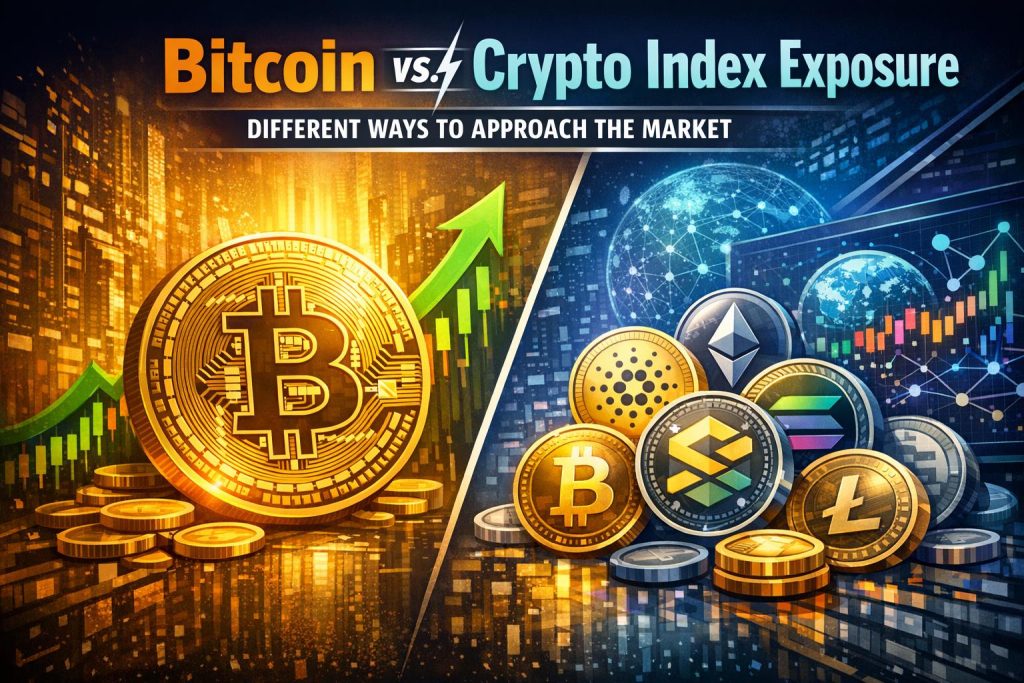

Bitcoin vs. Crypto Index Exposure: Different Ways to Approach the Market

Understanding Bitcoin

Bitcoin, often referred to as digital gold, represents one of the most significant innovations in modern finance. Introduced in 2009 by an individual or group using the pseudonym Satoshi Nakamoto, Bitcoin was designed as a peer-to-peer electronic cash system that would operate without a central authority. Over time, its function has evolved from a payment system to a widely recognized digital asset and store of value. Today, Bitcoin remains the largest cryptocurrency by market capitalization and serves as the reference point for the broader digital asset market.

At its core, Bitcoin operates on a distributed ledger known as the blockchain. This public ledger records all transactions in a secure and transparent manner. Transactions are validated by participants in the network called miners, who use computational power to confirm blocks of transactions and add them to the blockchain. In return for their work, miners receive newly created bitcoins and transaction fees. This system ensures network security while also controlling the issuance of new coins.

One of Bitcoin’s defining characteristics is its limited supply. The protocol specifies that no more than 21 million bitcoins will ever exist. This predetermined scarcity distinguishes Bitcoin from traditional fiat currencies, which can be issued in unlimited quantities by central banks. The issuance rate decreases roughly every four years in an event known as the “halving,” which reduces the mining reward by half. This predictable issuance schedule contributes to Bitcoin’s monetary policy and informs how many investors evaluate its long-term value.

Historical Development and Market Role

In its early years, Bitcoin was primarily used by a niche group of cryptography enthusiasts and technologists. Over time, it gained broader awareness as exchanges were established and merchants began accepting it as a form of payment. Periods of rapid price appreciation brought significant media coverage, attracting both individual and institutional participants. By the mid-2010s, Bitcoin had become a recognized, though still speculative, alternative asset class.

Institutional adoption marked a significant turning point. Investment funds, publicly traded companies, and even some financial institutions began allocating portions of their portfolios to Bitcoin. This shift contributed to increased liquidity and infrastructure development, including custodial services, derivatives markets, and regulatory frameworks in various jurisdictions. Bitcoin’s presence in exchange-traded products and its integration into traditional brokerage platforms further expanded its accessibility.

Despite this evolution, Bitcoin continues to function independently of central authorities. Its decentralized governance structure means that changes to the protocol require consensus among network participants. While this can slow innovation compared to centrally managed systems, it also reinforces Bitcoin’s core principle of neutrality and resistance to unilateral modification.

Advantages of Bitcoin

Bitcoin offers several characteristics that distinguish it from other financial instruments and cryptocurrencies. These features contribute to its position as a foundational asset within the digital asset ecosystem.

Decentralization: Bitcoin operates on a decentralized network of nodes distributed globally. No single government, corporation, or entity controls the network. This distributed structure enhances resilience against censorship, fraud, and centralized manipulation. Transactions can be verified independently by any participant running a full node, reinforcing transparency and trust minimization.

Inflation Hedge: With a maximum supply capped at 21 million coins, Bitcoin is often viewed as a potential hedge against currency debasement. Unlike fiat currencies, whose supply may expand in response to economic policy decisions, Bitcoin’s issuance schedule is predetermined and enforced by code. Some investors consider this scarcity comparable to precious metals such as gold, particularly in environments characterized by expansionary monetary policies.

Liquidity: As the most widely recognized cryptocurrency, Bitcoin benefits from deep liquidity across global exchanges. It typically has higher trading volumes and narrower bid-ask spreads than other digital assets. This liquidity facilitates easier entry and exit for investors and allows for integration into derivative products such as futures and options.

Security and Network Effect: Over more than a decade of operation, Bitcoin has built a substantial network effect. Its extensive mining infrastructure and distributed node network contribute to its security. The longer the blockchain grows, the more computational effort would be required to alter past transactions. This cumulative security strengthens confidence in the immutability of recorded transactions.

Drawbacks of Focusing Solely on Bitcoin

While Bitcoin presents notable advantages, an exclusive focus on this asset may carry specific risks and limitations. Investors should assess these factors within the context of their broader financial objectives.

Volatility: Bitcoin’s price has historically demonstrated significant fluctuations over short time horizons. Market sentiment, regulatory announcements, macroeconomic developments, and technological changes can all influence its valuation. This volatility can create opportunities for traders but may pose challenges for long-term investors with lower risk tolerance.

Limited Exposure: The cryptocurrency ecosystem includes thousands of digital assets with varying use cases, ranging from decentralized finance platforms to smart contract networks and infrastructure protocols. Concentrating solely on Bitcoin may mean missing exposure to innovation occurring in other segments of the market. While many alternative cryptocurrencies carry elevated risk, some have developed substantial ecosystems and technological capabilities distinct from Bitcoin’s primary focus on value storage and transaction settlement.

Regulatory Uncertainty: Bitcoin operates within evolving regulatory landscapes. Different jurisdictions apply varying classifications and compliance requirements. Changes in regulation can influence trading access, taxation, and institutional participation. Although regulatory clarity has improved in several regions, ongoing developments may still impact market dynamics.

Exploring Crypto Index Funds

Crypto index funds represent an alternative approach to participating in the digital asset market. Instead of purchasing and managing individual cryptocurrencies, investors can gain exposure to a basket of assets through a single fund. This structure mirrors traditional index funds that track stock market indices such as the S&P 500 or global equity benchmarks.

A crypto index fund typically tracks a predefined set of digital assets according to market capitalization, liquidity, or thematic criteria. The fund manager or automated mechanism rebalances the portfolio periodically to maintain adherence to the chosen methodology. As a result, investors receive proportional exposure to multiple cryptocurrencies without manually trading each asset.

Index funds in the cryptocurrency space may exist as exchange-traded funds (where permitted by regulation), private investment vehicles, or tokenized index products managed on blockchain platforms. The structure and legal framework vary depending on jurisdiction and provider.

Benefits of Crypto Index Funds

Crypto index funds offer structural characteristics that may appeal to investors seeking diversified exposure and simplified management.

Diversification: By allocating capital across multiple digital assets, index funds distribute risk more broadly than a single-asset strategy. If one cryptocurrency experiences underperformance due to technical issues, regulatory challenges, or declining adoption, other assets in the portfolio may offset some of the impact. Diversification does not eliminate risk, but it may reduce concentration risk associated with holding a single asset.

Simplicity: Managing individual cryptocurrency holdings requires research, monitoring, and periodic portfolio adjustments. An index fund centralizes these responsibilities. Investors can access a curated exposure aligned with the overall market or a specific segment without selecting, storing, and rebalancing each asset independently.

Risk Management: Built-in diversification combines with systematic rebalancing to maintain targeted allocations. Rebalancing ensures that no single asset grows disproportionately large relative to the index methodology. This disciplined approach can reduce emotional decision-making and maintain exposure consistent with predefined rules.

Access to Emerging Segments: Some index funds focus on thematic areas such as decentralized finance, infrastructure protocols, or privacy-focused assets. These targeted funds allow investors to participate in specific trends within the broader crypto ecosystem without needing to identify individual leaders within each segment.

Considerations When Choosing a Crypto Index Fund

Despite their potential advantages, crypto index funds vary significantly in structure, composition, and costs. Careful evaluation is essential before allocating capital.

Asset Selection: Some funds track only the largest cryptocurrencies by market capitalization, often resulting in heavy weighting toward Bitcoin and Ethereum. Others incorporate mid- and small-cap tokens that may offer greater growth potential but also higher volatility and liquidity risk. Understanding the selection criteria and weighting methodology is essential for aligning the fund with an investor’s objectives.

Management Fees: Index funds generally charge management fees that may include administrative costs, custody expenses, and performance-related components. In the cryptocurrency sector, fees can vary widely depending on fund complexity and regulatory compliance obligations. Evaluating the total expense ratio and comparing it to potential benefits is necessary for determining overall cost-effectiveness.

Rebalancing Policy: The frequency and methodology of rebalancing influence portfolio composition and transaction costs. Frequent rebalancing can maintain closer adherence to market capitalization weights but may increase trading expenses. Less frequent adjustments might reduce costs while allowing allocations to drift further from initial targets. A transparent policy helps investors understand how the fund responds to market changes.

Custody and Security: Unlike traditional equities, cryptocurrencies require secure digital storage solutions. Assessing the fund’s custodial arrangements, insurance coverage, and security protocols is critical. Robust custody practices reduce the risk of asset loss due to hacking or operational failures.

Regulatory Framework: The legal structure of the fund determines investor protections, reporting standards, and tax treatment. Funds operating under recognized regulatory regimes often provide clearer compliance safeguards, though regulatory oversight may vary by region.

Comparative Analysis: Bitcoin Versus Crypto Index Funds

Choosing between a direct Bitcoin investment and a crypto index fund involves evaluating concentration versus diversification, simplicity versus control, and conviction versus broad exposure. Each approach presents a distinct risk-return profile.

Investing exclusively in Bitcoin concentrates capital in a single asset with a well-established network and defined monetary policy. This strategy may align with investors who hold strong conviction in Bitcoin’s role as a store of value or digital reserve asset. Concentration can amplify gains if Bitcoin outperforms the broader market, but it also exposes investors to asset-specific risks.

In contrast, a crypto index fund distributes exposure across multiple blockchain projects. This approach may appeal to investors who view the digital asset ecosystem as an emerging sector rather than favoring one protocol. Index exposure can capture sector-wide growth trends without depending on the performance of a single network.

Market cycles illustrate this distinction. During certain periods, alternative cryptocurrencies may outperform Bitcoin due to innovation cycles or investor appetite for higher-risk assets. At other times, Bitcoin may demonstrate relative strength during market contractions. An index strategy may moderate extremes by balancing exposure across these segments.

Tax considerations, transaction costs, and operational complexity also factor into the decision. Direct ownership of Bitcoin requires secure storage and potential interaction with exchanges. Index funds consolidate these tasks within a managed structure, though investors relinquish some control and incur management fees.

Conclusion

The decision to invest in Bitcoin or a crypto index fund depends on individual financial objectives, risk tolerance, and market perspective. Bitcoin represents a decentralized asset with predetermined scarcity, substantial liquidity, and a well-established network effect. Its historical development and market dominance have positioned it as a central component of the cryptocurrency ecosystem.

Crypto index funds, by contrast, offer diversified exposure to multiple digital assets through a single investment vehicle. This approach can simplify portfolio management and distribute risk across various blockchain projects. However, differences in asset selection, fees, custody standards, and regulatory oversight require thorough examination.

A considered evaluation of these factors, combined with an understanding of personal investment strategy, supports informed decision-making. Whether prioritizing concentrated exposure to Bitcoin or diversified participation in the broader digital asset market, disciplined research and alignment with long-term objectives remain essential.

How to Analyze Crypto Narratives Before They Become Crowded Trades

Understanding the Concept of Crypto Narratives

In the rapidly evolving world of cryptocurrencies, understanding the underlying narratives before they become crowded trades can offer significant strategic advantages. A crypto narrative refers to the overarching story, thesis, or belief system that frames how market participants interpret a particular technology, sector, or asset within the blockchain ecosystem. These narratives shape expectations about the future and influence capital allocation decisions across retail and institutional markets alike.

Unlike traditional valuation-driven markets, cryptocurrencies are highly sensitive to perception, momentum, and thematic developments. Many digital assets derive a substantial portion of their value not only from present utility but from projected future adoption. As a result, narratives often precede measurable financial performance. When a compelling story forms around a technological breakthrough, regulatory shift, or macroeconomic trend, capital flows tend to follow.

Narratives can range from themes such as decentralized finance reshaping traditional banking, to non-fungible tokens redefining digital ownership, to layer-two scaling solutions improving transaction throughput. They may revolve around technological innovation, regulatory developments, macroeconomic shifts, or sociocultural change. Understanding how these narratives form, spread, and mature is central to anticipating price movements before markets become saturated with participants pursuing the same thesis.

The Lifecycle of Crypto Narratives

Crypto narratives typically evolve through identifiable stages. In the earliest phase, a small group of developers and industry researchers begin exploring a new concept. At this stage, discussion is mostly technical and limited to specialized communities. Liquidity is generally thin, and pricing may not yet fully reflect the potential of the idea.

As the concept matures, early adopters and sophisticated investors recognize the implications. This second phase often includes increased venture funding, ecosystem development, and growing social discussion. Market participants begin forming clearer theses about how the theme may impact the broader blockchain landscape.

The narrative enters a broader awareness phase once mainstream social media, digital publications, and analytics platforms begin discussing it more regularly. Price movements typically accelerate during this period as liquidity deepens and new participants seek exposure. When coverage becomes widespread and capital inflows surge, the narrative may transition into what is commonly described as a crowded trade. At this stage, risk increases because expectations are elevated and valuations may detach from realistic growth trajectories.

Understanding where a narrative stands within this lifecycle is essential for managing both entry timing and exit strategy.

Identifying Emerging Narratives

To effectively analyze crypto narratives, it is necessary to identify emerging themes before they gain widespread attention. This requires a disciplined research process that incorporates qualitative observation, quantitative analysis, and contextual awareness of broader market conditions.

Monitoring Social Media and Online Forums

Social media platforms and online discussion forums serve as primary information channels within the cryptocurrency ecosystem. Developers, project founders, venture capitalists, traders, and analysts frequently share insights in public formats. Monitoring these discussions provides visibility into emerging ideas before they are reflected in formal research reports.

Rather than focusing on viral content alone, attention should be directed toward recurring technical discussions, ecosystem upgrades, governance debates, and new protocol launches. If certain technical concepts repeatedly surface across independent communities, it may indicate the early formation of a narrative. Observing the transition from niche dialogue to broader engagement provides clues regarding momentum development.

Engagement metrics such as steady growth in discussion volume, development commentary from reputable contributors, and early integration partnerships can signal that a theme is gaining structural traction rather than short-lived attention.

Following Influential Figures and Thought Leaders

Influential figures in the crypto sector often provide early commentary on technological shifts. These individuals may include protocol founders, venture investors, developers, researchers, and macro analysts who specialize in digital assets. Their commentary frequently synthesizes technical developments into broader thematic narratives.

Consistently reviewing commentary from knowledgeable participants allows investors to observe how professional thesis construction evolves. When multiple independent experts begin converging on similar conclusions about a development, it may suggest that a new narrative is forming beneath the surface.

It is important, however, to differentiate between promotional messaging and analytical commentary. Thought leadership that includes data references, balanced risk evaluation, and acknowledgment of uncertainties tends to carry greater informational value than content driven by rapid price appreciation alone.

Utilizing Analytical Tools and Research Platforms

Specialized crypto research platforms aggregate on-chain data, funding trends, token distribution metrics, and developer activity statistics. These datasets provide objective insight into whether a narrative is supported by measurable growth.

For example, rising developer commits to open-source repositories, increasing active addresses on a specific protocol, or accelerating total value locked in decentralized applications may support the credibility of a technological thesis. Similarly, venture funding concentration within a specific sub-sector can reveal where sophisticated capital expects long-term development.

Quantitative signals alone do not create narratives, but they often confirm whether emerging discussions are backed by structural ecosystem expansion. Combining qualitative observation with data-driven validation strengthens analytical accuracy.

Evaluating the Validity of Emerging Narratives

Once a potential narrative has been identified, assessing its validity becomes essential. Not all narratives sustain long-term growth. Some dissipate after initial enthusiasm fades, particularly if foundational assumptions prove unrealistic.

Analyzing Technological Foundations

A robust technological base is critical to narrative durability. Evaluating a project’s whitepaper, architecture, consensus mechanism, scalability design, and security audits provides clarity regarding feasibility. If the narrative claims transformative improvements, the technological documentation should clearly articulate how those improvements are achieved.

Reviewing development roadmaps, upgrade schedules, and repository activity also offers insight into execution capacity. Active development suggests that the project team is committed to implementation rather than relying solely on market enthusiasm.

Security considerations are equally important. Vulnerabilities, poorly tested smart contracts, or governance centralization may undermine long-term narrative sustainability. A narrative built on fragile infrastructure is unlikely to withstand broader adoption pressures.

Assessing Market Potential and Use Cases

Beyond technology, the narrative must address a credible market need. Evaluating real-world applications, competitive landscape positioning, and potential barriers to adoption provides practical context. If a narrative claims to replace or improve upon traditional systems, an assessment of those existing systems’ strengths and limitations helps determine plausibility.

Regulatory considerations also influence narrative sustainability. Themes aligned with emerging regulatory frameworks may experience smoother adoption compared to concepts that face persistent legal uncertainty. Geographic policy differences should be considered, especially when assessing global scalability.

Market potential analysis should distinguish between theoretical possibility and realistic adoption timelines. While long-term disruption scenarios can be compelling, near- and medium-term utility often determine sustained capital engagement.

Evaluating Broader Market Sentiment

Market sentiment amplifies or dampens emerging narratives. Even strong technological developments may struggle during broader risk-off environments. Conversely, narratives aligned with prevailing macroeconomic expectations often accelerate.

Tracking capital flows between different crypto sectors can reveal sentiment rotation. If investors begin reallocating from one theme to another, it may signal a shift in dominant narratives. Monitoring derivatives markets, funding rates, and open interest can also provide insight into speculative positioning levels.

Understanding the interaction between specific project fundamentals and general market cycles improves the ability to judge whether an emerging narrative is likely to gain traction under prevailing conditions.

Macro Factors Influencing Narrative Development

Crypto narratives rarely evolve in isolation from global economic developments. Interest rate cycles, liquidity conditions, geopolitical shifts, and technological policy trends frequently shape investor focus.

For example, in periods of expansive monetary policy, high-growth and speculative technological narratives may attract increased capital. In contrast, during tighter financial conditions, narratives emphasizing revenue generation, sustainability, or infrastructure reliability may receive more attention.

Institutional participation also influences thematic evolution. When traditional financial institutions enter the crypto market, narratives emphasizing compliance, interoperability, and risk management often gain prominence. Observing institutional research publications, regulatory filings, and partnership announcements provides additional context for narrative momentum.

Macro alignment does not guarantee success, but it increases the probability that a narrative will resonate with large capital allocators.

On-Chain Data as Narrative Confirmation

Blockchain transparency allows analysts to monitor real-time activity. Metrics such as transaction volume, wallet concentration, staking ratios, and network fees contribute to understanding whether a narrative reflects genuine usage.

Sustained growth in active users or transaction throughput suggests organic engagement. Conversely, sudden spikes followed by sharp declines may indicate speculative cycles rather than durable adoption.

Examining token distribution patterns can also highlight narrative sustainability. Highly concentrated holdings increase volatility risk and may undermine long-term stability. Balanced distribution combined with active participation may indicate healthier ecosystem development.

On-chain evidence serves as an important counterbalance to purely sentiment-driven interpretations.

Anticipating the Shift to Crowded Trades

As narratives gain traction, they can transition rapidly from underappreciated opportunities to crowded trades. Excessive capital inflows often lead to elevated valuations and compressed risk premiums. Identifying early signs of this transition allows for strategic reassessment.

Monitoring Trading Volumes and Liquidity Expansion

A notable increase in trading volume, exchange listings, and derivatives market activity frequently signals narrative maturation. Media outlets may begin publishing frequent coverage, and search engine interest tends to rise.

While increased liquidity can support price discovery, parabolic inflows may reduce upside potential relative to risk. Comparing current valuation multiples with historical benchmarks can help determine whether expectations have become overstretched.

Evaluating Media Saturation and Public Attention

Narratives that transition from specialized technical discourse to mainstream awareness often experience rapid price acceleration. Television coverage, general-interest publications, and celebrity endorsements typically appear near later stages of thematic cycles.

Although broad awareness is not inherently negative, saturation often indicates that incremental new buyers may decline. Risk management considerations become increasingly important during these stages.

Diversifying Strategies to Mitigate Concentration Risk

Implementing portfolio diversification can reduce exposure to narrative-specific volatility. Allocating capital across multiple emerging themes, infrastructure assets, and varying risk profiles helps balance potential drawdowns from overheated sectors.

Diversification also allows participation in early-stage narratives while maintaining resilience if dominant themes rotate. Crypto markets are characterized by rapid sector transitions; maintaining flexibility improves long-term consistency.

Behavioral Dynamics Behind Narrative Formation

Human psychology plays a significant role in narrative propagation. Market participants are inclined to cluster around coherent stories that simplify complex technological developments. Confirmation bias, herding tendencies, and fear of missing opportunity frequently influence capital deployment decisions.

Understanding these behavioral components allows for more disciplined analysis. When investors recognize the psychological drivers underlying rapid momentum, they can separate structural innovation from reflexive speculation.

This does not imply that narratives lack substance. Many technological breakthroughs initially driven by strong storytelling later evolve into foundational infrastructure. However, distinguishing between early innovation and speculative exaggeration remains critical.

Long-Term Perspective and Strategic Positioning

While short-term trading opportunities arise from rapid narrative acceleration, long-term wealth accumulation in the crypto sector often depends on identifying structural transformations early and allowing them to mature. Narratives that reshape core infrastructure, improve network scalability, or enable new economic models may endure across multiple market cycles.

Developing a repeatable framework for narrative evaluation improves decision-making consistency. This framework may include continuous monitoring of developer activity, capital flows, policy developments, macroeconomic alignment, and on-chain growth. Combining these elements creates a comprehensive picture of thematic strength.

Risk management should remain central throughout the process. Even well-supported narratives may encounter execution delays, regulatory challenges, or competitive disruptions. Position sizing, periodic reassessment, and profit realization strategies contribute to sustainable participation.

Conclusion

Analyzing crypto narratives before they become crowded trades requires integration of qualitative insight and quantitative verification. By observing early discussions, validating technological foundations, assessing real-world utility, and monitoring sentiment cycles, investors can better identify themes before widespread adoption occurs.

Narratives will continue to shape capital allocation within the digital asset ecosystem. Some will dissipate as conditions evolve, while others will define the next phase of technological infrastructure. A disciplined analytical approach enables strategic positioning without reliance on reactive decision-making.

In the dynamic landscape of cryptocurrencies, understanding how narratives originate, expand, and mature provides a structured foundation for navigating both opportunity and risk.

How to Use a Crypto Watchlist to Track High-Conviction Setups

Understanding Crypto Watchlists

A crypto watchlist is a structured monitoring system used by traders and investors to track selected digital assets for potential opportunities. In the cryptocurrency market, where price fluctuations can occur rapidly and without warning, maintaining a focused list of assets provides clarity and organization. Instead of scanning hundreds or thousands of cryptocurrencies, traders narrow their attention to a smaller group that meets predefined criteria.

A watchlist is not merely a collection of symbols. It represents a filtered selection based on strategy, risk tolerance, technical structure, liquidity, and underlying fundamentals. By concentrating on a curated group of assets, market participants can allocate their time and analytical resources more efficiently. This structured focus supports disciplined decision-making and reduces impulsive reactions to general market noise.

Crypto watchlists serve both short-term traders and long-term investors. Day traders may use them to track volatility and intraday momentum, while swing traders focus on multi-day patterns. Long-term investors might monitor trend development, adoption metrics, and market capitalization changes. Regardless of timeframe, the watchlist remains a practical framework for structured market observation.

Key Components of a Crypto Watchlist

A well-constructed crypto watchlist includes several interconnected elements. Each component contributes to a comprehensive view of market opportunities and risks.

Asset Selection: Choosing which cryptocurrencies to monitor is the foundational step. Traders often begin with established digital assets such as Bitcoin and Ethereum due to their liquidity and influence over broader market trends. These large-cap assets frequently set directional tone for altcoins. In addition to major cryptocurrencies, a watchlist may include mid-cap or emerging projects with clear catalysts, expanding ecosystems, or favorable technical structures. Limiting the number of tracked assets helps prevent information overload and maintains analytical depth.

Selection criteria vary depending on strategy. Some traders prioritize high liquidity and tight spreads to minimize slippage. Others seek volatility for short-term momentum trades. Long-term investors may evaluate development activity, tokenomics, governance models, and adoption metrics. Regardless of approach, disciplined asset selection ensures that each listing has a defined reason for inclusion.

Price Alerts: Price alert systems are an essential operational element. Modern trading platforms allow users to set notifications at predetermined price levels. These alerts act as triggers, informing traders when support or resistance zones are approached, when breakouts occur, or when price deviates significantly from recent averages.

Alerts reduce the need for constant screen monitoring while preserving responsiveness. For example, a trader anticipating a breakout above resistance can configure an alert slightly above that level. Similarly, alerts near invalidation points allow rapid reaction to limit potential losses. Over time, traders refine alert placement to align with their preferred entry and exit strategy.

News and Announcements: Cryptocurrency markets respond quickly to regulatory developments, technological upgrades, security incidents, and partnership announcements. A watchlist should incorporate a system for tracking relevant news for each asset. Hard forks, protocol updates, token burns, governance proposals, and regulatory classifications can influence valuation.

Monitoring project-specific announcements as well as broader macroeconomic developments provides context. For instance, changes in interest rates, institutional investment trends, or regulatory frameworks may impact overall market liquidity. Integrating fundamental awareness into a watchlist reduces the likelihood of technical analysis being undermined by external events.

Technical Indicators: Many traders complement price monitoring with technical indicators. Moving averages help identify overall trend direction. The Relative Strength Index (RSI) assists in evaluating overbought or oversold conditions. Bollinger Bands offer insight into volatility expansion or contraction. Volume metrics confirm the strength of price movements.

Indicators should be applied systematically rather than randomly. Consistency in timeframe selection and parameter settings ensures that signals remain comparable over time. Although no indicator is predictive in isolation, combining them with clear structural analysis enhances decision clarity.

Building and Maintaining a Crypto Watchlist

Constructing a watchlist requires deliberate preparation rather than spontaneous selection. The process typically begins with defining the overall trading framework. Time horizon, preferred volatility level, and capital allocation structure influence which assets qualify.

Identify High-Conviction Cryptocurrencies: High-conviction assets demonstrate characteristics that align closely with a trader’s methodology. These may include strong market structure, favorable risk-to-reward potential, consistent liquidity, or solid development activity. Conviction does not imply certainty; it indicates that multiple analytical factors converge to support monitoring the asset closely.

Fundamental research can strengthen conviction. Evaluating whitepapers, development roadmaps, ecosystem partnerships, token distribution models, and governance mechanisms provides context beyond price fluctuations. Metrics such as total value locked (TVL), active wallet addresses, transaction volume, and developer commit activity can indicate network traction and sustainability.

Utilize Crypto Platforms and Tools: Watchlist functionality is typically integrated into charting and market tracking platforms. These tools enable users to reorder assets, categorize them by sector, and attach annotations to charts. On platforms such as TradingView and CoinMarketCap, traders can combine live price tracking with technical analysis overlays. Alerts, comparative charts, and performance dashboards streamline workflow and centralize information.

Effective use of these platforms reduces fragmentation. Instead of switching between multiple applications for charts, news, and pricing data, a consolidated environment increases analytical efficiency. Over time, traders may develop templates that standardize chart layouts and indicator configurations across all watchlist assets.

Regularly Update Your Watchlist: Cryptocurrency markets evolve rapidly. Projects may lose momentum due to reduced development activity, declining liquidity, or adverse regulatory outcomes. Conversely, emerging assets may exhibit growing adoption or technical strength. Periodically reviewing watchlist composition prevents stagnation.

Maintenance involves removing underperforming or illiquid assets and adding those that meet revised criteria. Some traders conduct weekly audits, evaluating relative strength rankings and market structure. Others adjust their list based on sector rotation, such as shifts between decentralized finance, layer-two solutions, artificial intelligence tokens, or gaming ecosystems. Continuous refinement keeps the watchlist relevant and aligned with strategy.

Analyzing High-Conviction Setups

The primary purpose of a crypto watchlist is to identify actionable opportunities. High-conviction setups arise when multiple analytical factors align. Rather than relying on a single signal, traders seek confluence between price structure, volume dynamics, momentum indicators, and broader market conditions.

Chart Patterns: Classical chart formations often provide structured entry and exit frameworks. A head and shoulders pattern may indicate potential trend reversal after extended upward movement. Double tops and double bottoms highlight repeated rejection or accumulation at specific price levels. Triangles and flags typically represent consolidation phases preceding expansion. Recognizing these shapes across consistent timeframes supports scenario planning.

It is important to confirm patterns with volume and overall market alignment. A breakout from a consolidation range accompanied by elevated trading volume generally reflects broader market participation. Conversely, low-volume breakouts may lack follow-through. Structured pattern analysis contributes to disciplined timing rather than impulsive execution.

Volume Analysis: Volume represents participation intensity. When price rises on increasing volume, the movement may reflect genuine demand. Declining volume during upward movement may indicate weakening momentum. Observing divergence between price and volume can reveal potential reversals.

For example, if price continues to form higher highs while volume declines steadily, the rally may be losing strength. Similarly, accumulation phases often feature gradual price stabilization accompanied by incremental volume growth. Integrating volume metrics into watchlist analysis refines entry timing and improves evaluation of trend sustainability.

Market Sentiment: Sentiment reflects collective positioning and expectations. In cryptocurrency markets, sentiment often shifts rapidly based on macroeconomic changes, regulatory commentary, or technological breakthroughs. Monitoring social media trends, derivatives funding rates, open interest data, and news coverage helps contextualize price movement.

Excessively optimistic sentiment can precede corrective phases, while extreme pessimism may accompany accumulation zones. Sentiment analysis should complement rather than override technical and fundamental evaluation. Within a watchlist framework, traders may tag assets experiencing sentiment extremes for closer observation.

Combining chart structure, volume confirmation, and sentiment context creates layered analysis. A high-conviction setup often emerges when a bullish technical breakout occurs in conjunction with strengthening volume and improving sentiment indicators. This alignment does not eliminate uncertainty but narrows scenario probabilities.

Risk Management

Effective watchlist management extends beyond identifying opportunities. Risk management defines how capital is deployed and protected. Without predefined parameters, even well-analyzed trades can produce inconsistent outcomes.

Position sizing forms the foundation of risk control. Allocating a fixed percentage of capital per trade ensures that individual losses remain manageable. Traders commonly calculate position size based on the distance between entry point and stop-loss level. This approach standardizes exposure regardless of asset volatility.

Stop-loss placement is another essential practice. Stops are typically positioned at price levels that invalidate the trade thesis. For example, if a breakout above resistance triggers entry, a stop may be set below the previous consolidation range. This logical placement reduces emotional interference and enforces discipline.

Take-profit levels, whether fixed or dynamically adjusted, help secure gains. Some traders scale out of positions as price approaches predefined resistance zones. Others trail stops behind moving averages to capture extended trends. Documenting each decision within a trading journal enhances accountability and supports performance evaluation over time.

Diversification within a watchlist also plays a role in risk control. Concentrating capital exclusively in highly correlated assets may amplify exposure to sector-wide volatility. Monitoring correlation metrics between Bitcoin and altcoins, or among tokens within the same sector, informs allocation adjustments.

Strategic Organization of Watchlists

As trading experience develops, many market participants move beyond a single generic watchlist. Instead, they organize assets into segmented categories. For instance, one list may contain large-cap core holdings, another may track emerging small-cap tokens, and a separate list may focus on short-term technical breakouts. Structured segmentation improves efficiency by clarifying purpose.

Sector-specific watchlists also provide insight into relative performance trends. Observing simultaneous strength across multiple layer-one blockchains, for example, may indicate sector rotation. Conversely, weakness across decentralized finance tokens might signal declining liquidity within that niche. Structured grouping enables top-down analysis before individual asset selection.

Performance tracking can be incorporated directly into the watchlist environment. Recording percentage changes over various time horizons—daily, weekly, monthly—offers comparative insight. Assets consistently outperforming broader market benchmarks may warrant deeper analysis for sustained momentum.

Long-Term Versus Short-Term Watchlists

The design of a watchlist should reflect the intended timeframe. A short-term trading watchlist often emphasizes liquidity, volatility, and technical structure. Indicators are set to shorter intervals, and alerts are tighter to capture rapid movements. Entries and exits may occur within hours or days.

In contrast, a long-term investment watchlist prioritizes network fundamentals, ecosystem expansion, governance stability, and macro alignment. Technical analysis may focus on weekly or monthly charts rather than intraday fluctuations. Price alerts are typically broader, reflecting larger structural shifts rather than minor oscillations.

Separating these approaches prevents analytical conflict. Attempting to apply short-term indicators to long-term holdings may create unnecessary adjustments, while ignoring structural fundamentals in short-term trades may increase exposure to unexpected events. A clearly defined watchlist for each objective enhances clarity.

Continuous Improvement and Review

A crypto watchlist is not static. Market structure evolves as institutional participation increases, regulatory frameworks mature, and technological innovation accelerates. Periodic performance review ensures that the watchlist remains an effective decision-making tool.

Review may involve assessing whether monitored assets produced actionable opportunities, whether alerts were appropriately placed, and whether analysis techniques remain relevant. Traders may backtest historical setups to refine criteria. Adjustments based on empirical observation strengthen long-term consistency.

Maintaining documentation of trade rationale, execution quality, and outcome metrics supports objective evaluation. Over time, patterns emerge regarding which asset types and setup conditions align best with individual strengths. Incorporating these insights into watchlist construction promotes gradual improvement.

In practice, a crypto watchlist represents disciplined observation rather than constant action. Its value lies in structured preparation. By focusing attention on selected assets, integrating technical and fundamental awareness, and applying systematic risk control, traders and investors position themselves to respond methodically to market developments. Continuous refinement of this framework enhances efficiency and supports consistent participation in the evolving cryptocurrency landscape.

The Role of Market Cycles in Crypto Investing and Trading Decisions

The Role of Market Cycles in Crypto Investing and Trading Decisions

Understanding market cycles is fundamental to making structured and informed decisions in cryptocurrency investing and trading. Digital asset markets are known for their volatility, rapid shifts in sentiment, and evolving regulatory and technological developments. Within this environment, market cycles provide a framework for interpreting price action, investor behavior, and liquidity conditions. While no framework guarantees predictive accuracy, recognizing cyclical patterns can improve entry and exit planning, capital allocation, and risk management.

Unlike traditional markets with decades or centuries of historical data, cryptocurrency markets are relatively young. However, they have already exhibited repeated cyclical behavior, often influenced by macroeconomic liquidity conditions, Bitcoin halving events, regulatory changes, and technological developments such as decentralized finance and tokenized ecosystems. Understanding how these elements interact with broader market psychology is essential to integrating market cycle analysis into decision-making processes.

Understanding Market Cycles

A market cycle represents a recurring pattern in price trends and sentiment that unfolds over time. Although cycles rarely repeat in identical form, they tend to follow recognizable phases driven by supply and demand dynamics, liquidity inflows and outflows, and shifts in investor expectations.

In cryptocurrency markets, cycles are often amplified by high retail participation, leverage in derivatives markets, and rapid information dissemination through digital media. As a result, price movements may be faster and more pronounced than in many traditional asset classes. Nevertheless, the core structure of a market cycle typically consists of four phases: accumulation, uptrend (bull market), distribution, and downtrend (bear market).

These phases do not always develop in cleanly separated segments. Overlapping behaviors, false breakouts, and temporary counter-trend movements are common. Therefore, identifying a phase involves analyzing multiple indicators rather than relying on price movements alone.

Accumulation Phase

The accumulation phase usually occurs after a prolonged downtrend. Prices stabilize within a relatively narrow range, volatility gradually declines, and trading activity becomes subdued compared to peak market conditions. During this phase, speculative participation is limited, and public interest is often lower than during periods of rapid growth.

Long-term investors, sometimes referred to as “strong hands,” may begin to accumulate positions during this period. Their decisions are often based on fundamental analysis, including network growth metrics, development activity, institutional adoption, and macroeconomic conditions. The rationale is that risk-reward conditions are more favorable when valuations have significantly contracted from previous highs.

Technically, accumulation may be characterized by the formation of a price base. Market participants monitor support levels, on-chain data such as wallet accumulation, exchange outflows, and declining selling pressure. While price action may appear uneventful, accumulation can lay the foundation for subsequent upward trends by gradually absorbing excess supply.

It is important to note that accumulation phases can last for months and can include temporary retests of previous lows. Attempting to identify the precise bottom is difficult; therefore, structured approaches such as staggered entries may reduce timing risk.

Uptrend (Bull Market) Phase

The uptrend phase, commonly known as a bull market, begins when demand consistently exceeds supply, leading to higher highs and higher lows in price charts. Increased trading volume, improving sentiment, and renewed media coverage often accompany this transition.

As confidence grows, new participants enter the market. Institutional involvement may increase, derivatives trading volumes may rise, and capital inflows expand beyond large-cap assets to include smaller tokens. This broadening of participation can create momentum-driven price appreciation.

During the early stages of a bull market, price gains may be moderate and supported by improving fundamentals. In later stages, speculative behavior can intensify. Leverage usage may increase, and valuations may outpace measurable performance indicators. This expansion phase can produce significant returns, but it also raises systemic risk within the market structure.

Experienced investors monitor both technical and on-chain indicators during this stage. Momentum oscillators, moving averages, and liquidity measures can help identify whether the trend remains sustainable. However, extended bull markets often include corrections that test investor discipline. Not every price decline marks the end of the uptrend; some represent consolidation periods before continuation.

Distribution Phase

The distribution phase typically follows significant price appreciation. Rather than an immediate reversal, this phase often appears as a plateau or range-bound movement near peak price levels. Trading volumes may remain elevated, but price advancement slows.

During distribution, early investors and informed participants may begin reducing exposure to secure gains. At the same time, new entrants may continue buying, influenced by prior positive performance. This transfer of assets from longer-term holders to newer participants gradually weakens upward momentum.

Market indicators during distribution may include bearish divergences in momentum indicators, decreasing network activity growth rates, or rising exchange inflows. Sentiment may remain constructive despite emerging structural weaknesses, making this phase challenging to identify in real time.

Distribution does not guarantee an immediate sustained downturn. Short-term breakouts above prior highs may occur, sometimes referred to as “blow-off tops.” However, once buying pressure becomes insufficient to absorb selling, the balance shifts toward declining prices.

Downtrend (Bear Market) Phase

The downtrend phase, or bear market, is defined by a consistent pattern of lower highs and lower lows. Selling pressure increases, liquidity contracts, and speculative activity declines. This phase can be accelerated by leveraged liquidations, regulatory announcements, macroeconomic tightening, or failures of significant market participants.

In cryptocurrency markets, bear markets are often marked by sharp corrections rather than gradual declines. Reduced market depth can amplify volatility. Furthermore, interconnected lending and derivative platforms may contribute to cascading liquidations.

During this period, asset correlations often increase, meaning that even fundamentally strong projects may decline alongside weaker ones. Risk management becomes central. Investors may reduce exposure, rebalance portfolios, or hold stable assets to preserve capital.

Despite the challenges, bear markets also reset valuations and eliminate inefficient market structures. Technological development often continues during these periods, even if price action remains subdued. Over time, declining selling pressure and stabilizing fundamentals can set the stage for eventual accumulation and the start of a new cycle.

Market Cycles and Investment Strategies

Recognizing where the market stands within its broader cycle allows investors and traders to adjust strategies according to prevailing conditions. While precise timing remains difficult, aligning strategy with cycle context can improve consistency and risk-adjusted outcomes.

In cryptocurrency markets, where volatility can exceed that of equities or commodities, aligning exposure with cycle phases may help control drawdowns and capitalize on expansion periods.

Entry and Exit Strategies

Entry strategies often vary depending on cycle position. During accumulation, investors may use systematic buying techniques, including phased allocations or dollar-cost averaging. This reduces exposure to short-term volatility and avoids reliance on predicting exact market bottoms.

During early bull markets, breakout strategies may be effective, particularly when price moves above long-term resistance with increasing volume. Traders may also use trend-following tools, such as moving average crossovers, to confirm directional bias.

Exit strategies are equally influenced by cycle recognition. In distribution phases, partial profit-taking may be considered as risk-reward dynamics change. Rather than attempting to identify the precise market top, structured exit plans—such as scaling out positions when predefined profit targets are reached—can improve discipline.

In bear markets, conservative positioning may dominate. Some traders employ hedging strategies using derivatives, while long-term investors may prioritize capital preservation over aggressive return targets.

Risk Management

Risk management remains central across all market phases. However, the nature of risk evolves. During bull markets, the primary risk may be overexposure at elevated valuations. During bear markets, the primary risk shifts to liquidity constraints and accelerated capital losses.

Position sizing can be adjusted in response to cycle dynamics. For example, reducing leverage during late-stage bull markets may limit exposure to unpredictable reversals. Similarly, increasing cash allocations during distribution phases may provide flexibility for future opportunities.

Stop-loss orders, portfolio rebalancing, and scenario planning are commonly used tools. In addition, monitoring macroeconomic indicators such as interest rate policies, inflation trends, and global liquidity conditions can provide early warnings of structural changes that may influence crypto cycles.

Portfolio Diversification

Portfolio diversification within cryptocurrency markets may include allocations across large-cap assets, mid-cap tokens, stablecoins, and exposure to different sectors such as decentralized finance, infrastructure protocols, and tokenized real-world assets.

Cycle awareness informs these allocations. During early bull markets, higher beta assets may outperform large established tokens. Conversely, during downturns, investors may rotate toward assets perceived as more resilient or maintain partial stablecoin allocations to mitigate volatility.

Diversification can also extend beyond crypto markets. Incorporating traditional assets such as equities, fixed income instruments, or commodities may reduce overall portfolio volatility, particularly in prolonged bear markets.

External Influences on Crypto Market Cycles

While internal market psychology drives many cyclical patterns, external influences can accelerate or distort cycles. Central bank monetary policies, changes in risk appetite across global markets, and regulatory frameworks affect capital flows into digital assets.

Liquidity conditions are particularly significant. Periods of expansive monetary policy and lower interest rates have historically coincided with stronger participation in higher-risk asset classes. Conversely, tightening cycles can reduce speculative capital, increasing the probability of extended downturns.

Technological milestones also influence crypto-specific cycles. Network upgrades, scalability improvements, or breakthroughs in interoperability can reinforce bullish narratives. Similarly, security breaches, exchange insolvencies, or regulatory enforcement actions can accelerate bearish transitions.

Understanding these macro and micro drivers enhances the interpretation of apparent cycle phases, providing context beyond technical chart patterns.

Timeframes and Cycle Variations

Market cycles operate across multiple timeframes. A long-term macro cycle spanning several years may contain shorter-term cycles lasting weeks or months. Traders often focus on shorter cycles, while long-term investors evaluate broader structural trends.

For example, within a multi-year bull market, intermediate corrections of 20 to 40 percent may occur without ending the overall upward trajectory. Recognizing this layering of cycles helps avoid overreacting to short-term volatility.

Historical cryptocurrency cycles have sometimes aligned with Bitcoin halving events, which reduce the rate of new supply issuance. Although past performance does not determine future outcomes, observing recurring patterns in supply dynamics contributes to structured analysis.

Limitations of Cycle Analysis

Although market cycle frameworks provide valuable context, they are inherently interpretive. Phases become obvious in retrospect but may be ambiguous in real time. Large, unexpected events—such as significant regulatory changes or macroeconomic shocks—can abruptly interrupt expected transitions.

Overreliance on cycle assumptions may also result in confirmation bias. Investors might interpret neutral developments as supporting a preconceived phase classification. To mitigate this, combining multiple data sources—technical indicators, on-chain analysis, derivatives metrics, and macroeconomic signals—can improve objectivity.

Furthermore, crypto markets continue to evolve. Institutional adoption, exchange-traded products, and improved custody solutions may alter volatility structures and cycle durations over time.

Conclusion

Market cycles offer a structured framework for understanding price behavior in cryptocurrency markets. By identifying phases such as accumulation, uptrend, distribution, and downtrend, investors and traders can better align entry timing, exit planning, risk management, and portfolio allocation with prevailing market conditions.

Although cycles do not repeat with exact symmetry and external events can disrupt expected patterns, integrating cycle awareness into strategy development can enhance decision-making discipline. In a market characterized by rapid shifts and substantial volatility, recognizing cyclical dynamics supports more consistent analysis and structured capital deployment over time.

How to Manage Position Sizing in High-Volatility Crypto Markets

Understanding Position Sizing

Position sizing is a foundational element of structured trading. It determines how much capital is allocated to a single transaction and directly influences both portfolio stability and long-term performance. Regardless of the asset class, traders operate in an environment defined by uncertainty. In high-volatility markets such as cryptocurrency, that uncertainty is amplified by rapid price fluctuations, varying liquidity, and evolving market structures. Within this context, position sizing becomes the mechanism that translates abstract risk tolerance into measurable action.

At its core, position sizing answers a practical question: how much of a specific asset should be bought or sold in a given trade? The answer must reflect both the trader’s capital base and the acceptable level of loss. Without a structured approach, capital exposure can quickly become disproportional to account size, leading to instability after periods of drawdown. A consistent position sizing method ensures that no single outcome overwhelms the overall portfolio.

The Importance of Risk Management

Risk management underpins effective trading. While strategies often focus on entry timing or price forecasting, sustainable performance depends more on how losses are controlled than on how gains are achieved. Volatile markets frequently produce unpredictable price swings. In cryptocurrency markets, double-digit intraday percentage changes are not unusual. This volatility increases both opportunity and risk.

Risk management defines the portion of available capital that can be exposed to potential loss in a single trade. By limiting exposure to a predetermined percentage of the total portfolio, traders impose structural boundaries on their risk. For example, risking 1% to 3% of the account balance per trade provides a mechanism for absorbing multiple losses without significant impairment of capital.

Effective position sizing serves as the operational arm of risk management. It connects theoretical risk tolerance to actual trade size. Without formal sizing calculations, traders may overextend during periods of confidence or reduce exposure excessively after losses, creating inconsistency in performance. A standardized approach contributes to stability and reduces variability driven by short-term market conditions.

Capital Allocation and Portfolio Protection

Capital preservation is a prerequisite for compounding returns over time. A trading account exposed to repeated large losses requires proportionally larger gains to recover. For instance, a 50% drawdown requires a 100% gain to return to the starting balance. Position sizing reduces the likelihood of such extreme setbacks.

Allocating capital across multiple trades also requires attention to correlation. In cryptocurrency markets, many assets move in relation to broader market sentiment. Even if individual positions appear independent, systemic downturns can affect multiple holdings simultaneously. Structured position sizing limits the impact of correlated declines by ensuring that aggregate exposure remains within acceptable limits.

Portfolio protection extends beyond individual trades. A comprehensive framework considers maximum exposure per asset, per sector, and across the entire portfolio. This layered approach prevents cumulative risk from exceeding intended boundaries.

Calculating Position Size

Determining the appropriate position size involves several sequential steps. The process begins with identifying total trading capital. Only funds designated for trading activities should be included in these calculations. Next, a risk percentage is selected. This percentage reflects both financial circumstances and tolerance for variability.

For illustrative purposes, consider a trader with $10,000 in trading capital who chooses to risk 2% per trade. Two percent of $10,000 equals $200, which represents the maximum allowable loss for that position.

The next variable is the stop-loss level, defined as the predetermined exit point at which the trade will be closed if price movement invalidates the initial thesis. Suppose the trader plans to enter a cryptocurrency at $50 and places a stop-loss at $45. The risk per unit equals the difference between the entry price and stop-loss price, which is $5.

To calculate position size, the risk amount is divided by the risk per unit. Dividing $200 by $5 yields 40 units. Purchasing 40 units ensures that, if the stop-loss is triggered, the loss does not exceed $200, excluding transaction costs and slippage. This calculation translates percentage-based risk into a precise quantity of assets.

Such structured computation prevents arbitrary trade sizing. Instead of selecting round numbers or imitating other market participants, the trader bases allocation on measurable parameters.

Integrating Transaction Costs and Slippage

Although basic calculations assume precise execution, real markets involve transaction costs and potential slippage. Exchange fees, bid-ask spreads, and network costs in cryptocurrency trading may slightly increase or decrease effective risk. In periods of rapid price movement, actual exit prices may differ from preset stop levels.

To maintain discipline, traders often incorporate a margin buffer into position size calculations. Reducing the calculated size slightly can compensate for execution variability. This adjustment supports consistency between theoretical and actual risk exposure.

Fixed Fractional Versus Fixed Dollar Risk

Position sizing methods can differ in structure. The fixed fractional approach risks a consistent percentage of total capital on each trade. As capital grows, absolute position size increases proportionally. Conversely, if losses reduce the account value, position sizes decrease automatically. This method maintains proportional risk alignment over time.

The fixed dollar approach risks a constant monetary amount per trade, regardless of account fluctuations. While simpler to administer, it gradually changes relative exposure as account size varies. In expanding accounts, fixed dollar risk becomes more conservative; in shrinking accounts, it becomes comparatively aggressive.

Most professional frameworks favor percentage-based sizing because it adapts dynamically to capital changes and supports compounding.

Adjusting for Volatility

Volatility directly influences stop-loss placement and, by extension, position size. Narrow stop-loss levels in highly volatile markets can lead to frequent premature exits. However, widening stop-loss distances increases per-unit risk and therefore reduces allowable trade size.

To maintain consistent dollar risk, a wider stop-loss necessitates a smaller position. This inverse relationship ensures that broader price fluctuations do not inflate capital exposure. The discipline of recalculating size for each trade prevents subconscious overcommitment during uncertain market phases.

In cryptocurrency markets, volatility can vary across assets and timeframes. A structured framework accounts for these differences instead of applying uniform position sizes across all trades.

Volatility-Based Position Sizing with ATR

One method for quantifying volatility is the Average True Range (ATR). ATR measures average price movement over a defined period, providing a statistical estimate of typical fluctuations. Traders may set stop-loss distances as a multiple of ATR, such as 1.5 or 2 times its value.

For example, if the ATR indicates an average daily movement of $4 and the chosen multiple is two, the stop-loss may be placed $8 away from the entry point. The per-unit risk would therefore reflect this volatility-adjusted distance. Dividing the predetermined dollar risk by this larger risk per unit yields a smaller position size, maintaining consistent capital exposure.

ATR-based sizing adapts automatically to shifting volatility regimes. During calm periods, tighter stops permit larger positions. During turbulent periods, wider stops reduce position size proportionally.

Leverage and Margin Considerations

Cryptocurrency markets frequently offer leveraged trading through derivatives and margin accounts. Leverage magnifies both potential returns and potential losses. When leverage is applied, position sizing discipline becomes even more critical.

A leveraged trade increases market exposure beyond the trader’s actual capital contribution. If a position is ten times leveraged, a 1% price movement results in a 10% change in the invested capital. Position size calculations must therefore focus on total notional exposure rather than margin posted.

For example, risking 2% of capital on a leveraged trade still requires calculating risk based on full price movement between entry and stop-loss. Failure to adjust calculations for leverage can produce unintended overexposure.

Psychological Stability Through Structured Sizing

Although trading involves analytical processes, behavioral factors influence decision-making. Structured position sizing reduces variability that can arise from inconsistent exposure. When trade size is predetermined by formula rather than short-term preference, decisions become standardized.

Smaller, consistent losses are generally easier to manage than irregular large losses. By defining risk before entry, traders establish expectations aligned with their financial capacity. This approach minimizes reactive adjustments after market movement begins.

Over time, maintaining consistent exposure contributes to a stable performance curve. Variability in returns can still occur, but it reflects market conditions rather than disproportionate allocation.

Consistency and Rule Adherence

A position sizing framework must be applied uniformly to yield meaningful results. Deviating from predefined percentages during periods of perceived opportunity creates asymmetry in risk distribution. Similarly, reducing size excessively after a series of losses may prevent recovery during subsequent favorable conditions.

Consistency requires documenting risk parameters and reviewing them periodically rather than adjusting them impulsively. Structured rules transform position sizing from a reactive decision into an integral component of strategy execution.

Adapting to Changing Market Conditions

While consistency is important, periodic evaluation ensures relevance. Cryptocurrency markets evolve rapidly, influenced by regulatory developments, macroeconomic factors, and technological innovation. Liquidity profiles and volatility characteristics can shift significantly over time.

Traders may reassess risk tolerance in response to changes in personal financial circumstances or shifts in market structure. For instance, during prolonged periods of systemic volatility, reducing the base risk percentage per trade may provide additional protection.

Adaptation should occur through structured review rather than isolated reactions to recent losses or gains. Maintaining written criteria for adjustments ensures that modifications are deliberate and measurable.

Position Sizing Across Multiple Strategies

Some traders employ multiple strategies simultaneously, such as trend-following, mean reversion, or breakout systems. Each strategy may have distinct win rates and risk-reward profiles. Position sizing can be calibrated to reflect these statistical differences.

For example, a strategy with a lower win rate but higher average reward may warrant different exposure than one with a higher win rate and smaller payoff ratio. Advanced frameworks use metrics such as expected value and standard deviation of returns to refine allocation.

Portfolio-level sizing may also incorporate diversification across time horizons. Short-term trades and longer-term holdings can coexist, provided their combined risk remains within acceptable aggregate limits.

Compounding and Long-Term Growth

One of the primary benefits of percentage-based position sizing is its compatibility with compounding. As account equity increases, allowable risk per trade expands proportionally. This gradual scaling supports accelerated growth without altering the core structure of risk management.

Conversely, during drawdowns, reduced position sizes protect remaining capital. This self-correcting feature prevents aggressive exposure during periods of reduced resilience. Over extended timeframes, compounding driven by disciplined sizing can contribute more significantly to performance stability than short-term entry optimization.

Record-Keeping and Performance Analysis

Position sizing should be accompanied by detailed trade records. Documenting entry price, stop-loss, position size, risk percentage, and outcome enables systematic performance analysis. Reviewing these records helps determine whether losses align with predefined risk levels or result from deviation from strategy.

Performance data can also reveal whether the selected risk percentage aligns with psychological and financial comfort. Excessive stress during small drawdowns may indicate overly aggressive sizing, while negligible impact from repeated losses may suggest overly conservative exposure.

Quantitative assessment of results contributes to continuous refinement within a structured framework.

Conclusion

Position sizing transforms risk tolerance into precise trade allocation. In high-volatility environments such as cryptocurrency markets, structured sizing protects capital against disproportionate loss while enabling measured participation in favorable price movements. By integrating defined risk percentages, calculated stop-loss distances, volatility adjustments, and periodic review, traders establish a systematic foundation for portfolio management.

Consistent application of position sizing principles contributes to sustainability in uncertain markets. Rather than relying solely on predictive accuracy, disciplined allocation ensures that individual outcomes remain proportionate to total capital. Within a comprehensive trading strategy, position sizing functions as the stabilizing mechanism that balances opportunity with risk control over the long term.

Crypto Portfolio Allocation Strategies for Different Risk Tolerances

Introduction to Crypto Portfolio Allocation

Cryptocurrency has developed from a niche technological experiment into a recognized asset class that attracts retail investors, institutions, and corporate treasuries. As market infrastructure has matured, digital assets have become more accessible through exchanges, exchange-traded products, custodial services, and decentralized finance platforms. Despite this growth, cryptocurrencies remain more volatile and less correlated with traditional financial markets than many conventional investments. For that reason, portfolio allocation plays a central role in determining long-term outcomes.

Crypto portfolio allocation refers to the proportion of total investable assets assigned to digital currencies and related instruments. The appropriate allocation depends largely on an investor’s financial objectives, time horizon, liquidity needs, and tolerance for risk. A well-structured allocation seeks to balance risk and return in a way that reflects these personal constraints. Rather than attempting to predict short-term price movements, allocation focuses on structuring exposure in a disciplined manner.

Unlike speculative trading, portfolio allocation considers diversification, risk management, and consistency. Investors who treat cryptocurrency as part of a coordinated strategy—rather than an isolated bet—are often better positioned to manage volatility. Whether an investor is conservative, moderate, or aggressive, a structured approach provides a framework for decision-making.

Understanding Risk Tolerance

Risk tolerance describes the degree of variability in investment outcomes that an individual is willing and financially able to endure. In the context of cryptocurrency, this concept is especially significant because price swings can be substantial within short time frames. It is important to distinguish between ability to take risk and willingness to take risk. An investor might be emotionally comfortable with volatility but lack the financial capacity to withstand extended losses. Conversely, someone with strong financial reserves may still prefer stability over growth.

Risk tolerance is not static. It evolves as personal circumstances, income stability, and market experience change. A disciplined investor periodically reassesses their comfort level with risk, especially after major financial milestones or significant market events. This evaluation helps prevent misalignment between portfolio design and personal circumstances.

Factors Influencing Risk Tolerance

Several interconnected factors determine risk tolerance. Investment goals are often the primary driver. An investor saving for a short-term objective, such as a property purchase within two years, may prioritize capital preservation. In contrast, an individual investing for retirement over several decades may accept interim volatility for higher expected growth.

Investment horizon also plays a significant role. Longer horizons historically allow more time for recovery from market downturns. In cryptocurrency markets, cycles of expansion and contraction can be pronounced. Investors with extended time frames may choose to maintain exposure during downturns, expecting eventual recovery, whereas short-term investors may not have this flexibility.

Financial situation is equally important. Investors with stable income, emergency savings, and diversified assets outside cryptocurrency may allocate more aggressively than those with concentrated income sources or limited liquidity. Debt obligations, dependents, and healthcare considerations can further influence allocation choices.

Psychological resilience is another, often underestimated factor. Cryptocurrency markets operate continuously and can experience rapid movements outside traditional trading hours. Investors who closely monitor markets may feel stress during volatility. Portfolio design should account for the practical reality of maintaining discipline during fluctuations.

Portfolio Allocation Strategies

Crypto allocation strategies generally fall into three broad categories: conservative, moderate, and aggressive. These categories are not rigid templates but conceptual frameworks. Investors may blend elements of each strategy depending on their circumstances.

It is also essential to recognize that cryptocurrency exposure exists on a spectrum. Direct ownership of large-cap coins differs from participation in decentralized finance protocols, staking mechanisms, or early-stage tokens. Allocation decisions should address not only percentage exposure but also the type of digital assets included.

Conservative Strategy

A conservative crypto allocation strategy is designed for investors who prioritize capital preservation and reduced volatility. Cryptocurrency exposure typically represents a limited proportion of the total portfolio, often in the range of 10 to 20 percent. The majority of assets remain in traditional investments such as fixed-income securities, cash equivalents, dividend-paying equities, or diversified funds.

Within the crypto allocation itself, emphasis is placed on large-cap, established digital assets. Bitcoin is frequently considered the benchmark due to its market dominance, liquidity, and long operational history. Ethereum often complements Bitcoin because of its technological significance and role in decentralized applications. These assets, while still volatile relative to traditional securities, tend to exhibit lower relative volatility than smaller altcoins.

A conservative investor may also choose regulated investment vehicles, such as crypto exchange-traded products, rather than direct custody of private keys. This approach can reduce operational complexity and perceived technical risk. However, it may introduce management fees and counterparty considerations.

The objective of the conservative strategy is not to maximize upside during bull markets but to participate in potential long-term appreciation while limiting exposure during downturns. Over time, even a modest allocation can contribute meaningfully to overall returns if digital assets appreciate.

Moderate Strategy

The moderate strategy seeks equilibrium between growth potential and risk control. Cryptocurrency exposure often ranges between 30 and 40 percent of the total portfolio, though exact figures vary depending on personal circumstances. The remaining allocation typically includes a mix of equities, bonds, and possibly alternative assets.

Within the crypto segment, diversification becomes more pronounced. In addition to Bitcoin and Ethereum, moderate investors may include high-liquidity assets such as Binance Coin, Solana, Cardano, or similar platforms with established ecosystems. Market capitalization, trading volume, and network adoption are common evaluation criteria.

A moderate strategy may also integrate income-generating mechanisms such as staking or yield-based protocols, provided risks are understood. Staking allows holders of certain cryptocurrencies to earn network rewards by participating in validation processes. While this can enhance returns, it introduces technical and counterparty considerations that must be managed.

This approach acknowledges the growth potential of emerging blockchain technologies while maintaining diversification across non-crypto assets. It aims to reduce correlation risk and moderate the impact of downturns in either asset class. Investors using this strategy often rebalance periodically to maintain target allocations, ensuring that strong rallies do not unintentionally convert the portfolio into a higher-risk position.

Aggressive Strategy

An aggressive crypto allocation strategy is suitable for investors with high risk tolerance, long investment horizons, and stable financial foundations. In this structure, cryptocurrencies may constitute 50 percent or more of total portfolio value. The remaining assets may include high-growth equities, venture-style investments, or emerging market exposure.

Within the crypto allocation, aggressive investors often diversify beyond established assets to include mid-cap and smaller altcoins. These may represent new blockchain platforms, decentralized finance protocols, gaming ecosystems, or infrastructure tokens. While these assets may offer higher potential returns, they carry increased volatility, liquidity risk, regulatory uncertainty, and technological risk.

Active management is more common within aggressive strategies. Investors may rotate among sectors, participate in new token launches, or allocate capital to decentralized finance applications. This requires substantial research, risk awareness, and ongoing monitoring.

Although aggressive allocation can produce significant gains during favorable market conditions, it can also result in sharp portfolio contractions during downturns. Therefore, this strategy is generally appropriate only for individuals who can withstand substantial drawdowns without compromising financial stability or long-term plans.

Diversification Within Crypto Portfolios

Diversification is a fundamental principle of portfolio construction. Within cryptocurrency, diversification can occur across several dimensions, including asset type, blockchain function, geographic exposure, and technological use case.

Large-cap coins often function as foundational holdings due to liquidity and network security. Smart contract platforms expand exposure to decentralized applications and decentralized finance ecosystems. Payment-focused coins emphasize transactional efficiency, while utility tokens may grant access to services within specific networks.

Stablecoins also play a strategic role in crypto portfolios. These tokens are typically pegged to fiat currencies and can serve as liquidity reserves within digital asset ecosystems. Holding stablecoins allows investors to reposition capital quickly during market corrections or participate in opportunities without transferring funds to traditional banking systems.

Nevertheless, diversification within cryptocurrency does not eliminate systemic risk. Digital assets often exhibit correlated price movements during macroeconomic events or regulatory developments. Therefore, broader portfolio diversification across asset classes remains relevant.

Dynamic Rebalancing

Regardless of strategy, rebalancing is a central component of effective portfolio management. Over time, differential performance among assets causes allocations to drift from their original targets. For example, a 40 percent crypto allocation may increase to 55 percent following a market rally. If left unadjusted, this shift alters the portfolio’s risk profile.

Dynamic rebalancing involves periodically restoring allocations to predetermined thresholds. This may be conducted on a fixed schedule, such as quarterly or annually, or triggered when allocations deviate beyond a specific percentage band. Rebalancing enforces discipline by encouraging investors to reduce exposure after strong appreciation and increase exposure after significant declines.

In cryptocurrency markets, where price movements can be rapid, rebalancing may also reduce the psychological impact of volatility. A predefined strategy minimizes reactive decision-making. However, transaction fees, tax implications, and market liquidity must be considered before executing adjustments.

Risk Management Considerations

Cryptocurrency investing presents distinct risks beyond price volatility. Regulatory developments can influence market access, taxation, and exchange operations. Technological vulnerabilities, including smart contract flaws or exchange security breaches, pose additional concerns. Investors must evaluate the security practices of platforms and consider cold storage or hardware wallets for direct holdings.

Liquidity risk is another factor. While major cryptocurrencies trade with substantial volume, smaller tokens may experience limited liquidity, particularly during market stress. This can widen bid-ask spreads and complicate exit strategies.

Tax treatment further influences allocation decisions. In many jurisdictions, cryptocurrency transactions generate taxable events, including capital gains or losses. Rebalancing strategies should account for potential tax liabilities to avoid unintended consequences.

Counterparty risk also arises when assets are held on centralized exchanges or within lending platforms. Although many institutions have strengthened compliance and custody standards, operational failures or insolvency remain possible. Diversifying storage solutions can mitigate these risks.

Behavioral Discipline and Long-Term Perspective

Market volatility can influence investor behavior. Rapid price increases may encourage overexposure, while downturns may lead to premature liquidation. A clearly defined allocation strategy serves as a stabilizing framework. By pre-establishing risk parameters, investors reduce the likelihood of decisions driven by short-term fluctuations.

Maintaining a long-term perspective is particularly important in cryptocurrency markets, which have historically exhibited cyclical patterns tied to technological development and adoption trends. Investors who align allocation with long-term objectives rather than short-term sentiment may experience more consistent outcomes.

Documentation of investment guidelines can improve discipline. Written allocation targets, rebalancing schedules, and criteria for adding or removing assets provide structure. Such governance practices are common in institutional portfolio management and can benefit individual investors as well.

Integration with Broader Financial Planning

Crypto allocation should not occur in isolation. It must be integrated into a comprehensive financial plan that includes emergency savings, insurance coverage, retirement accounts, and debt management. Overexposure to volatile assets without adequate liquidity reserves can create financial strain during market downturns.

Inflation expectations, interest rate environments, and macroeconomic conditions may also influence allocation decisions. Some investors view Bitcoin, for example, as a hedge against currency debasement. Others focus on blockchain technology as a driver of digital infrastructure growth. Understanding personal rationale for investment supports consistent strategic decisions.

Professional financial advice may assist investors in evaluating portfolio suitability, particularly when allocation sizes are substantial relative to net worth. Advisors can also provide tax planning guidance and risk assessment tailored to jurisdictional considerations.

Conclusion

Crypto portfolio allocation is a structured process that balances growth objectives with risk tolerance and financial realities. Conservative investors typically limit digital asset exposure and concentrate on established cryptocurrencies, emphasizing capital stability. Moderate investors blend diversified crypto holdings with traditional assets to achieve balanced growth. Aggressive investors accept higher volatility through expanded crypto exposure and participation in emerging sectors.

Regardless of the chosen approach, disciplined rebalancing, diversification, and risk management are essential. Cryptocurrency markets present both opportunity and uncertainty. Allocation strategies grounded in clear objectives, realistic risk assessment, and integration with broader financial planning provide a practical foundation for long-term participation in this evolving asset class.